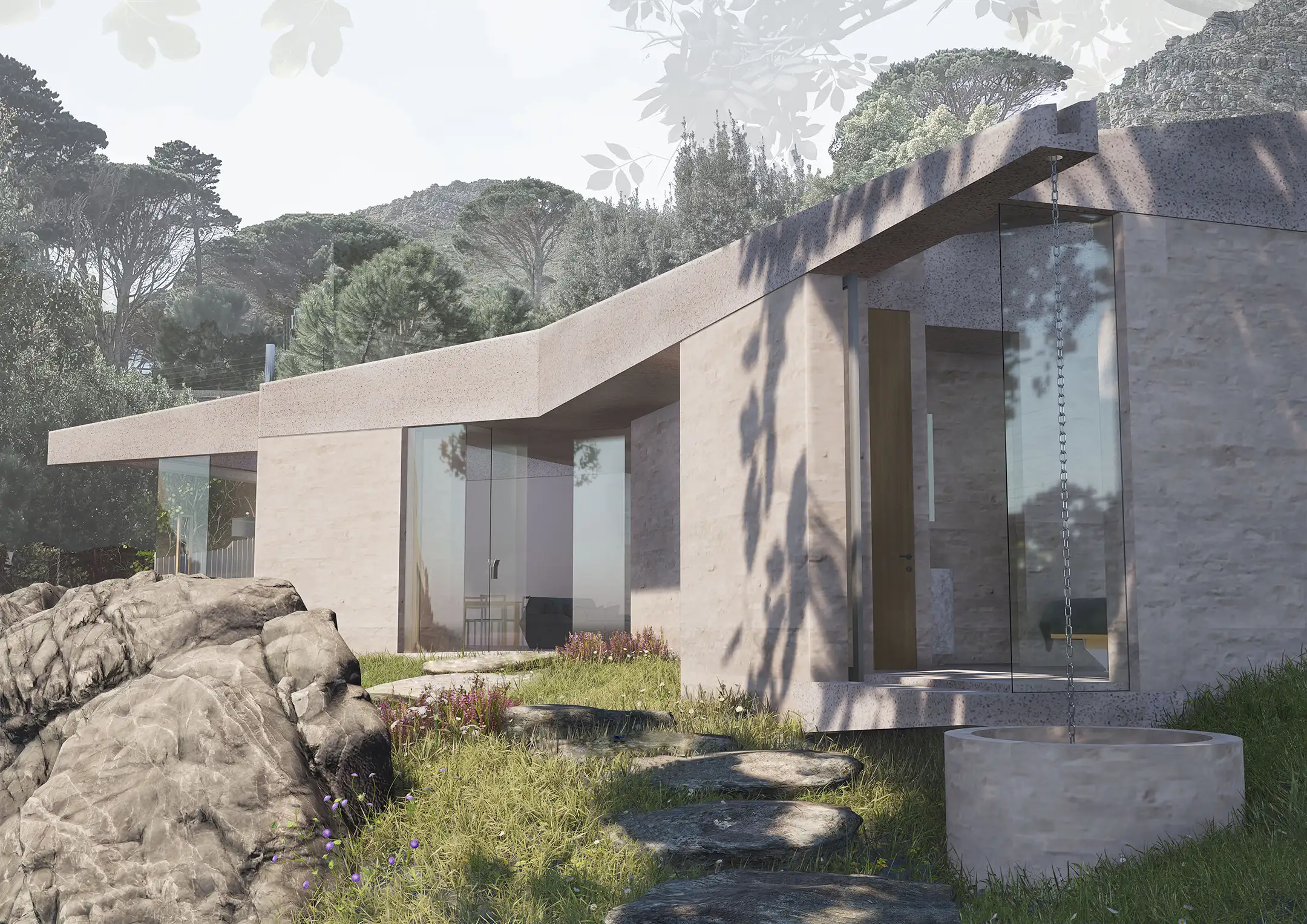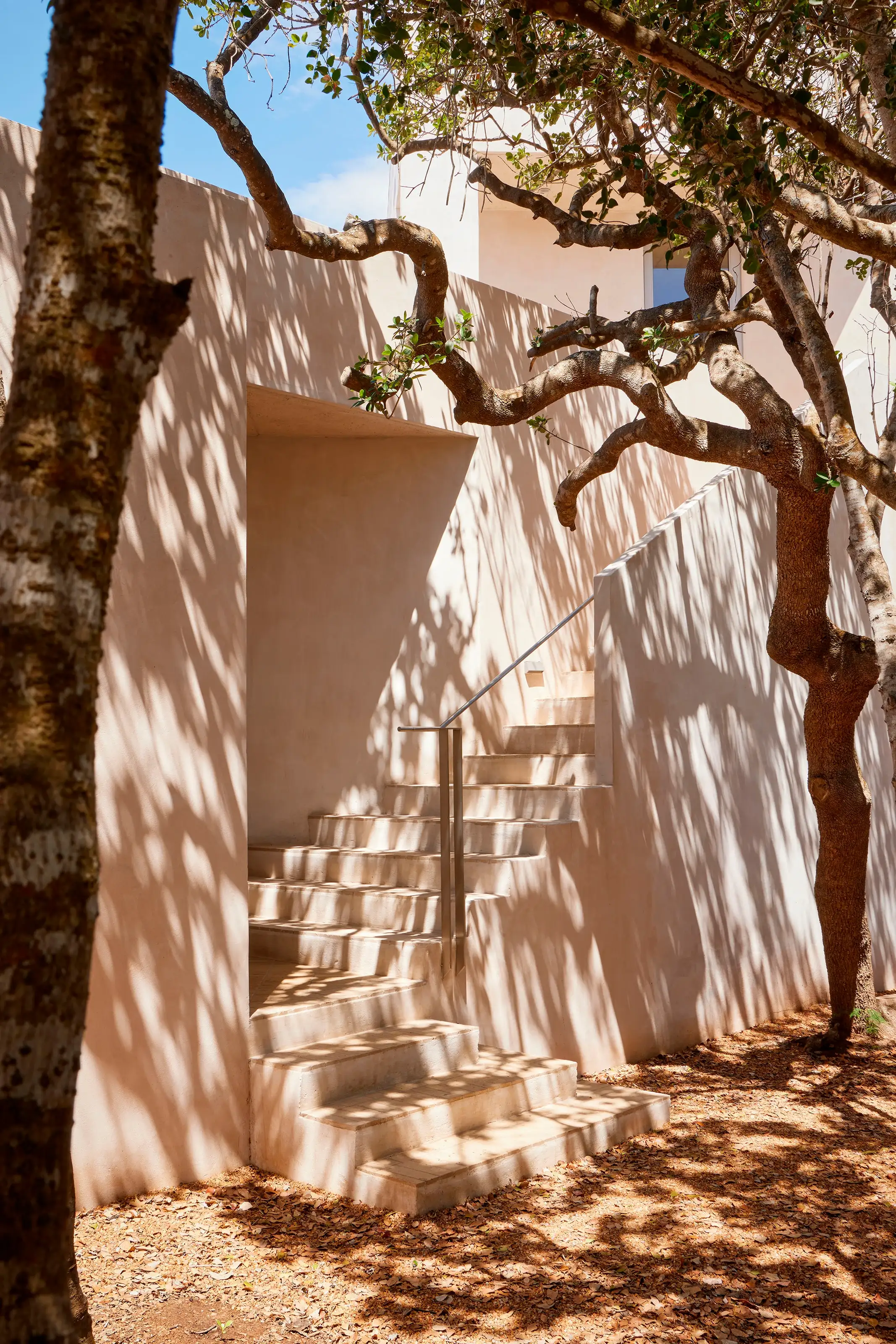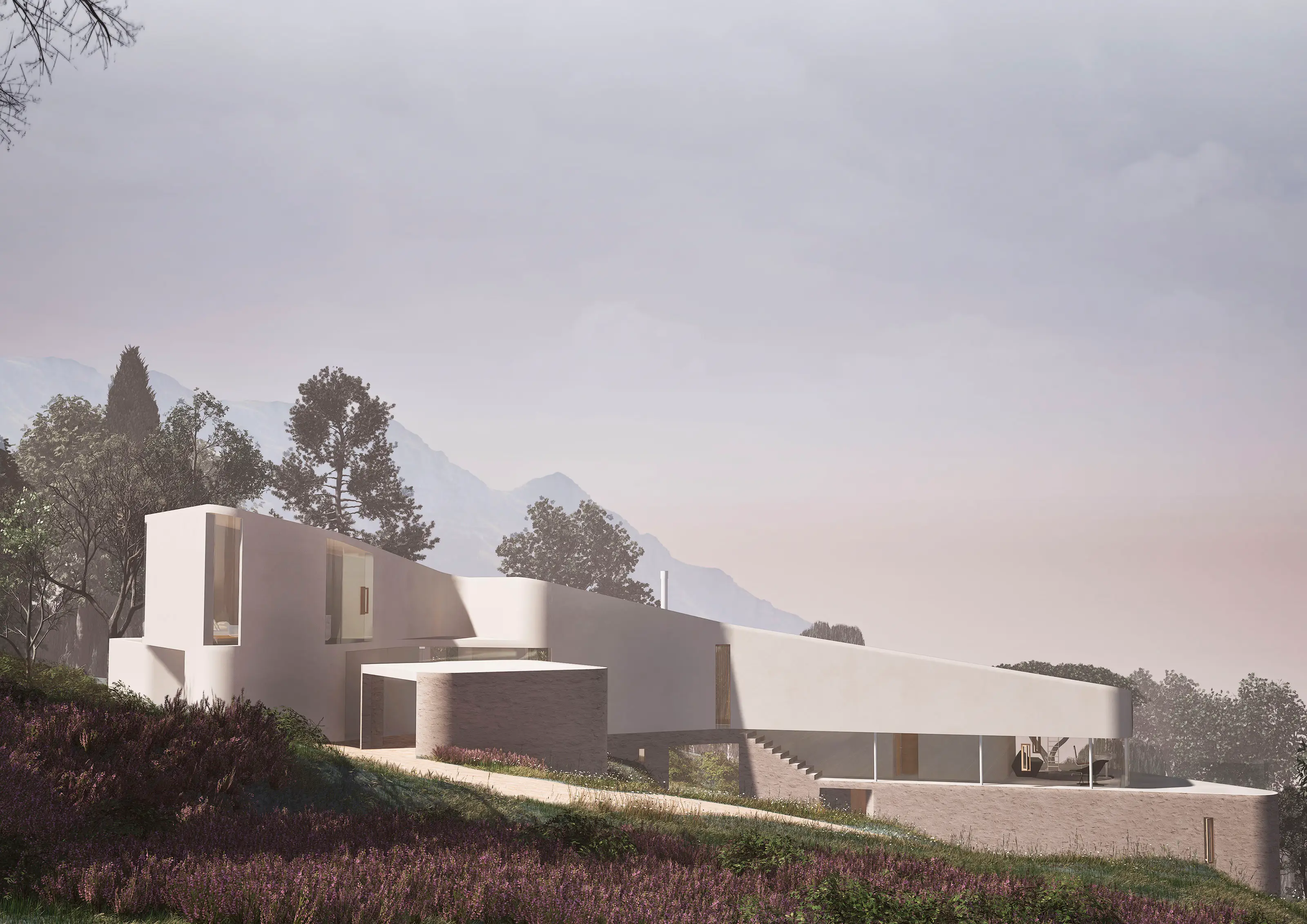
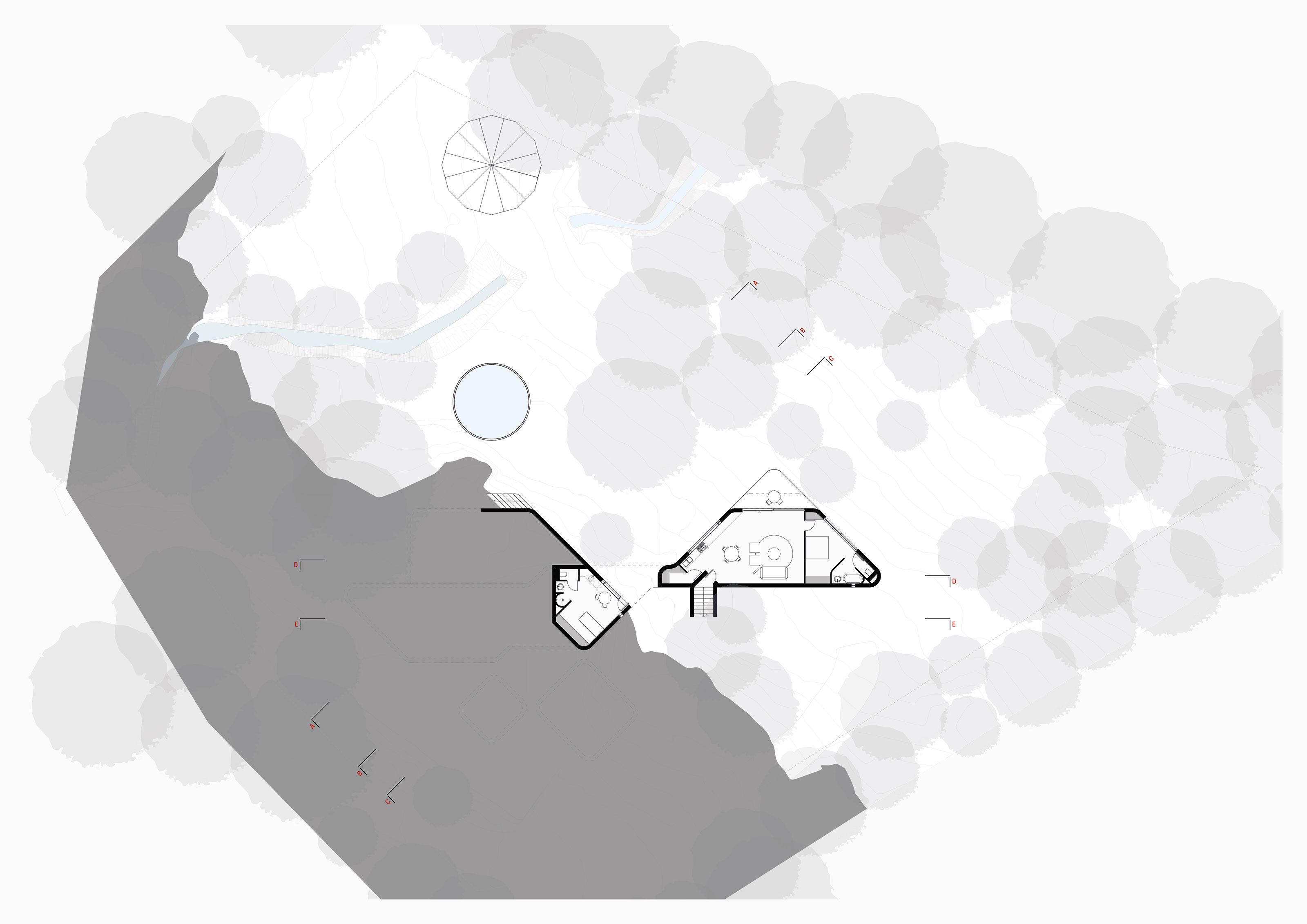
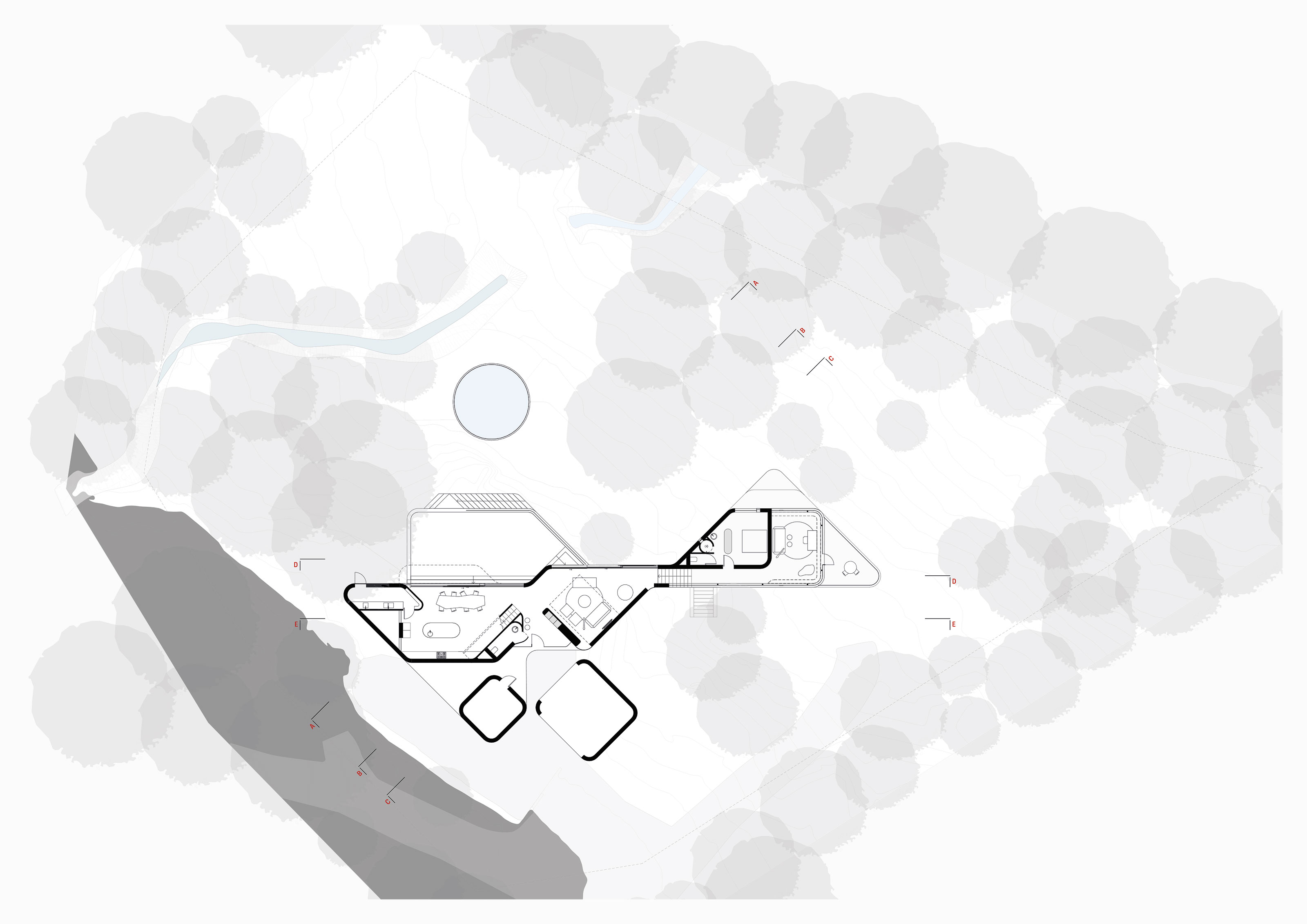
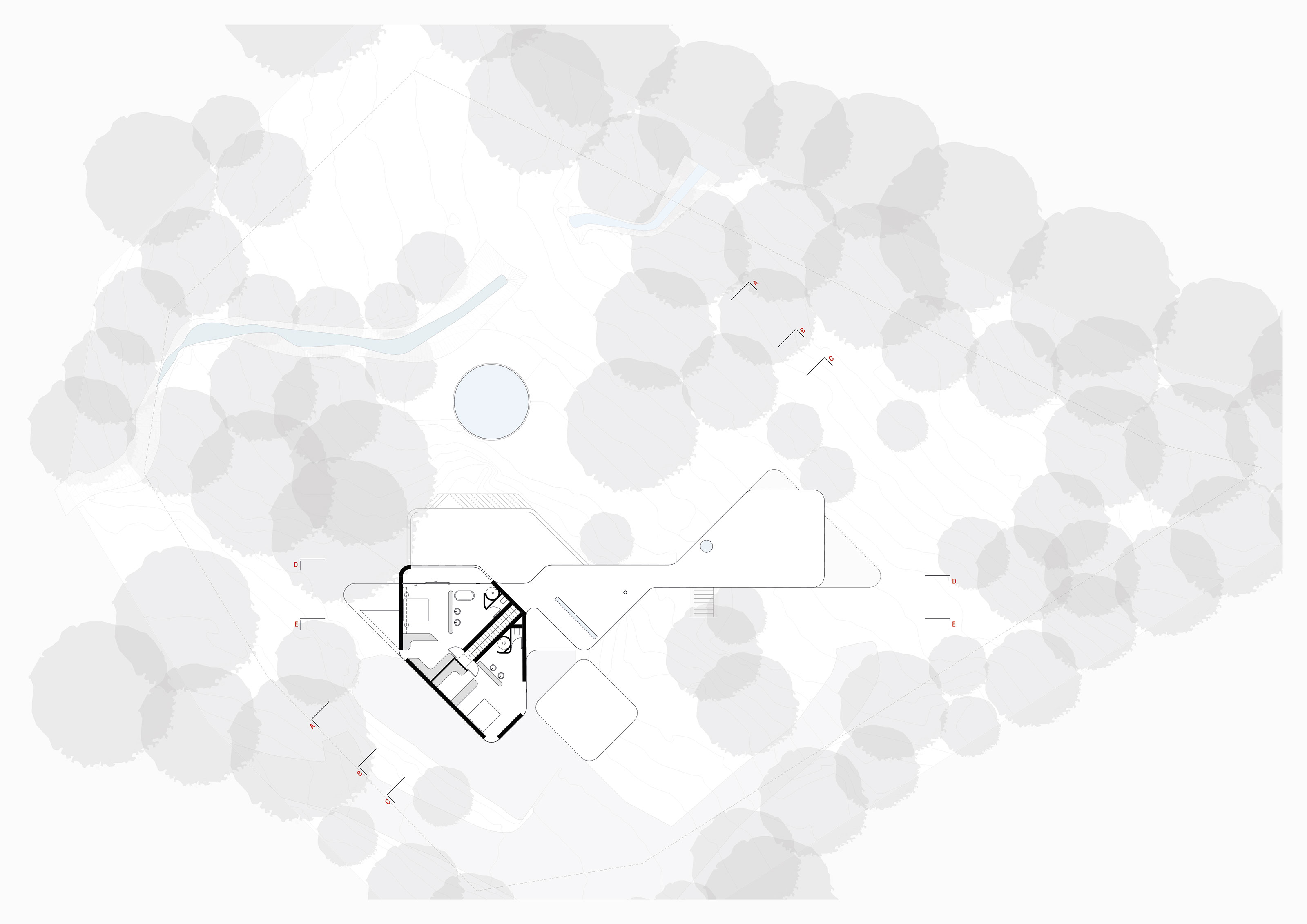

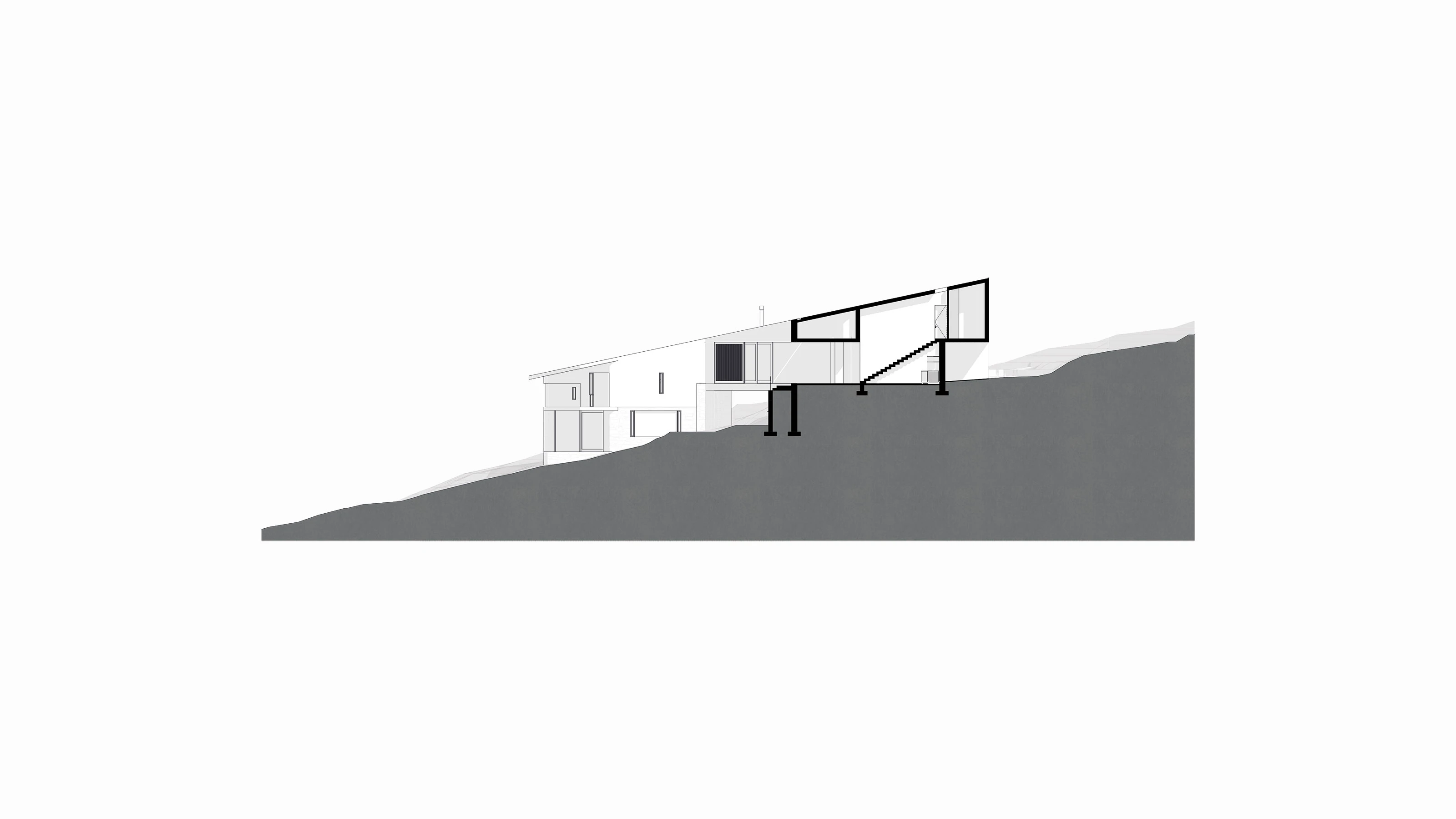
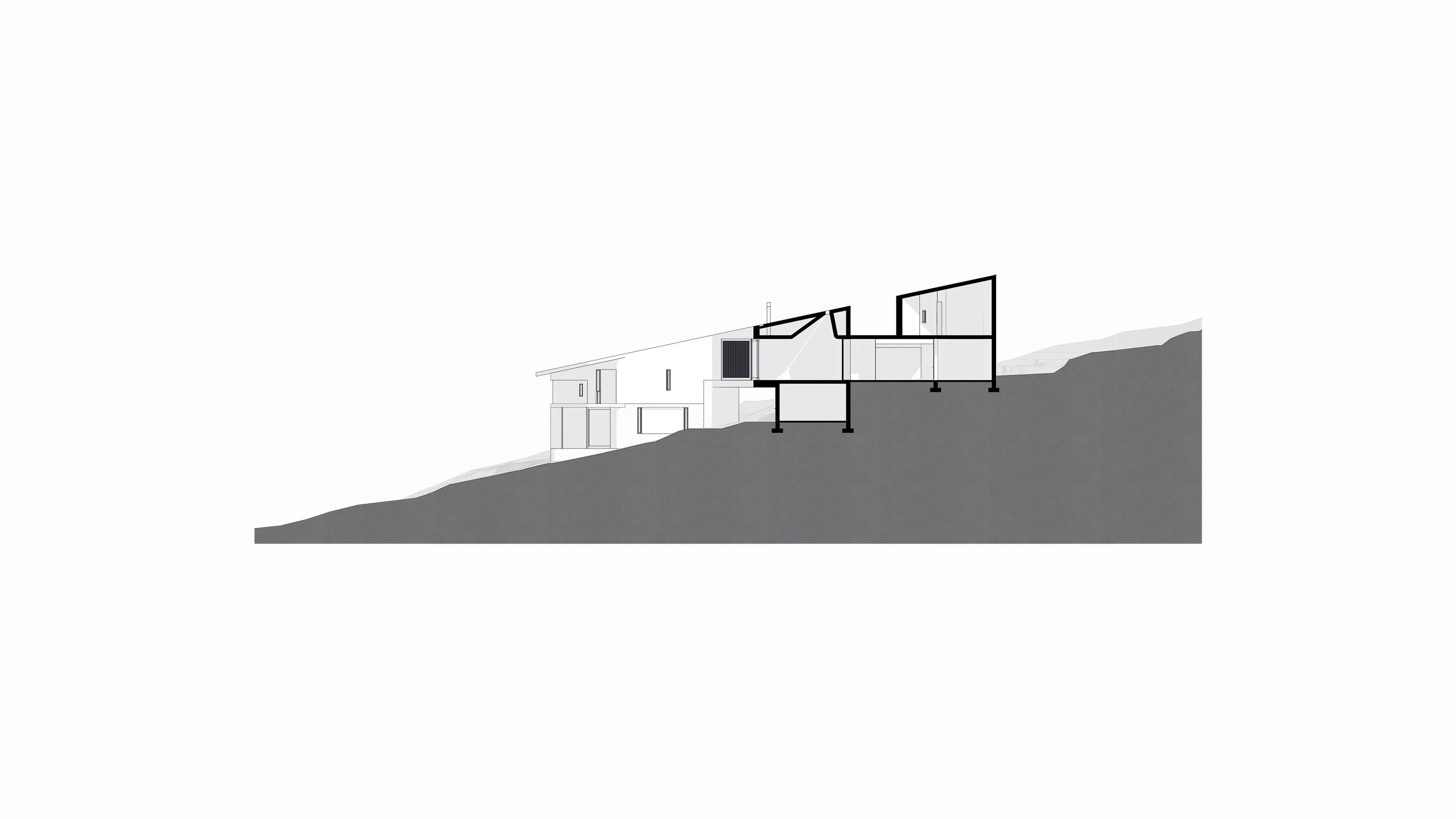
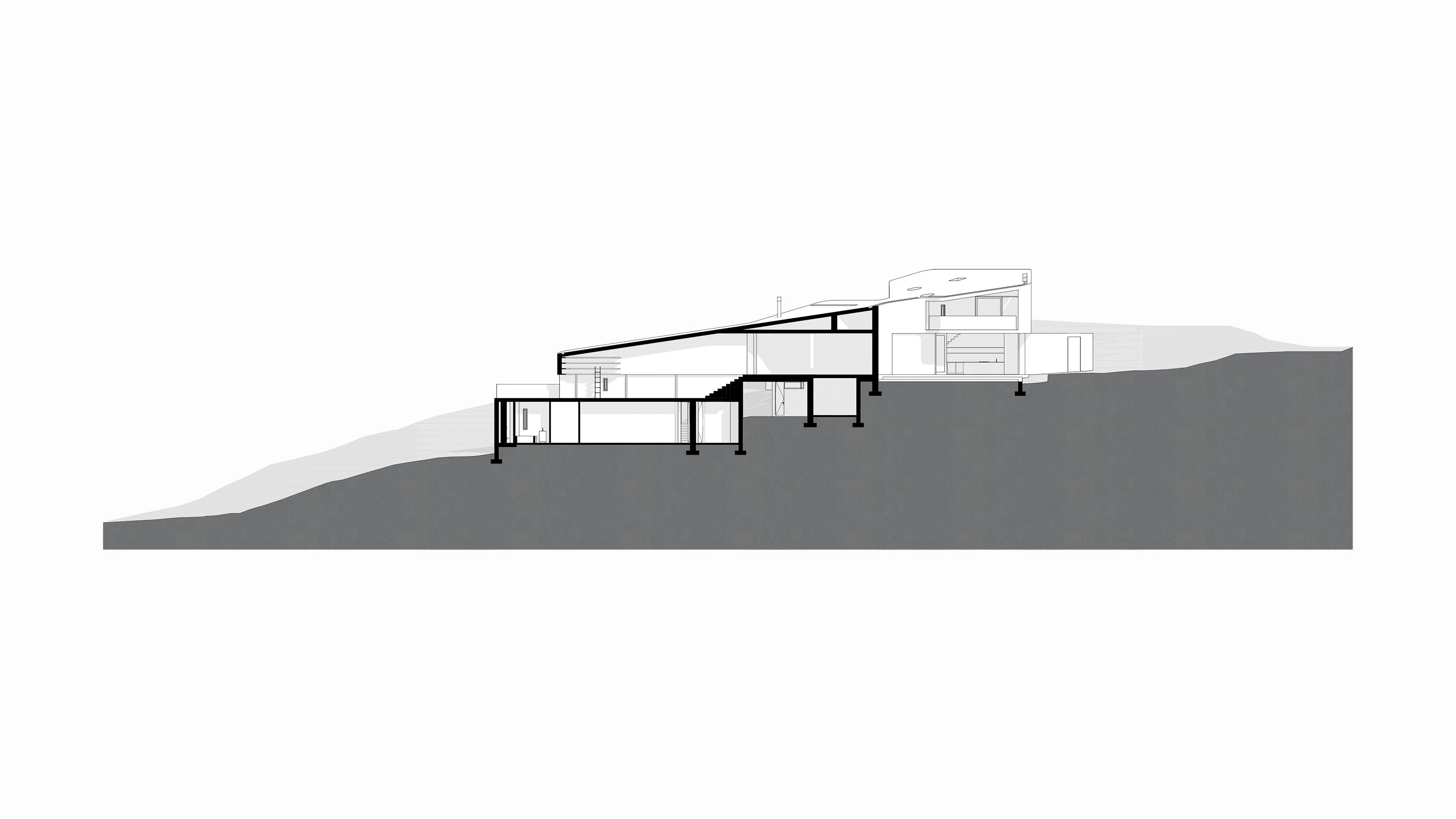
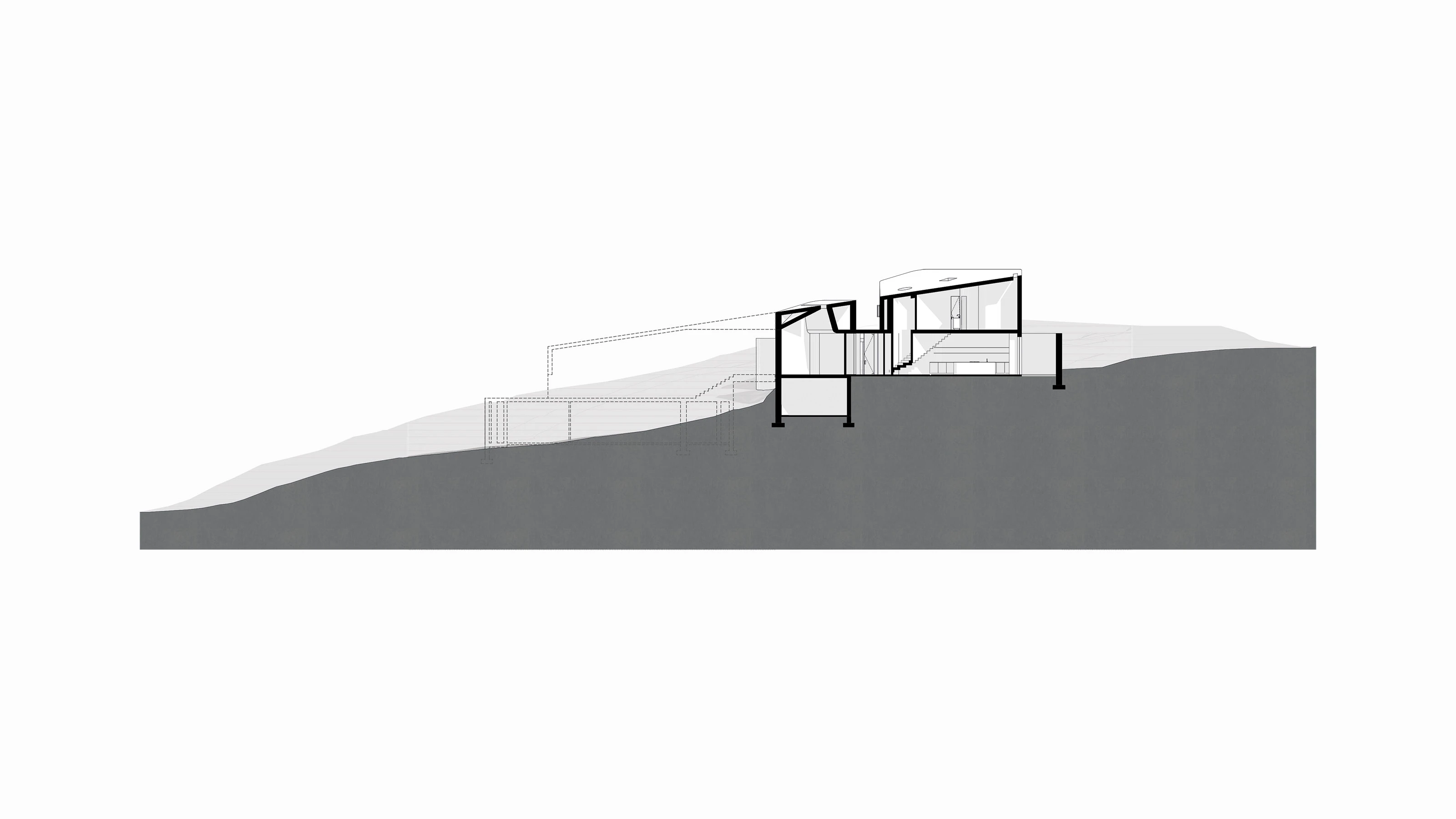
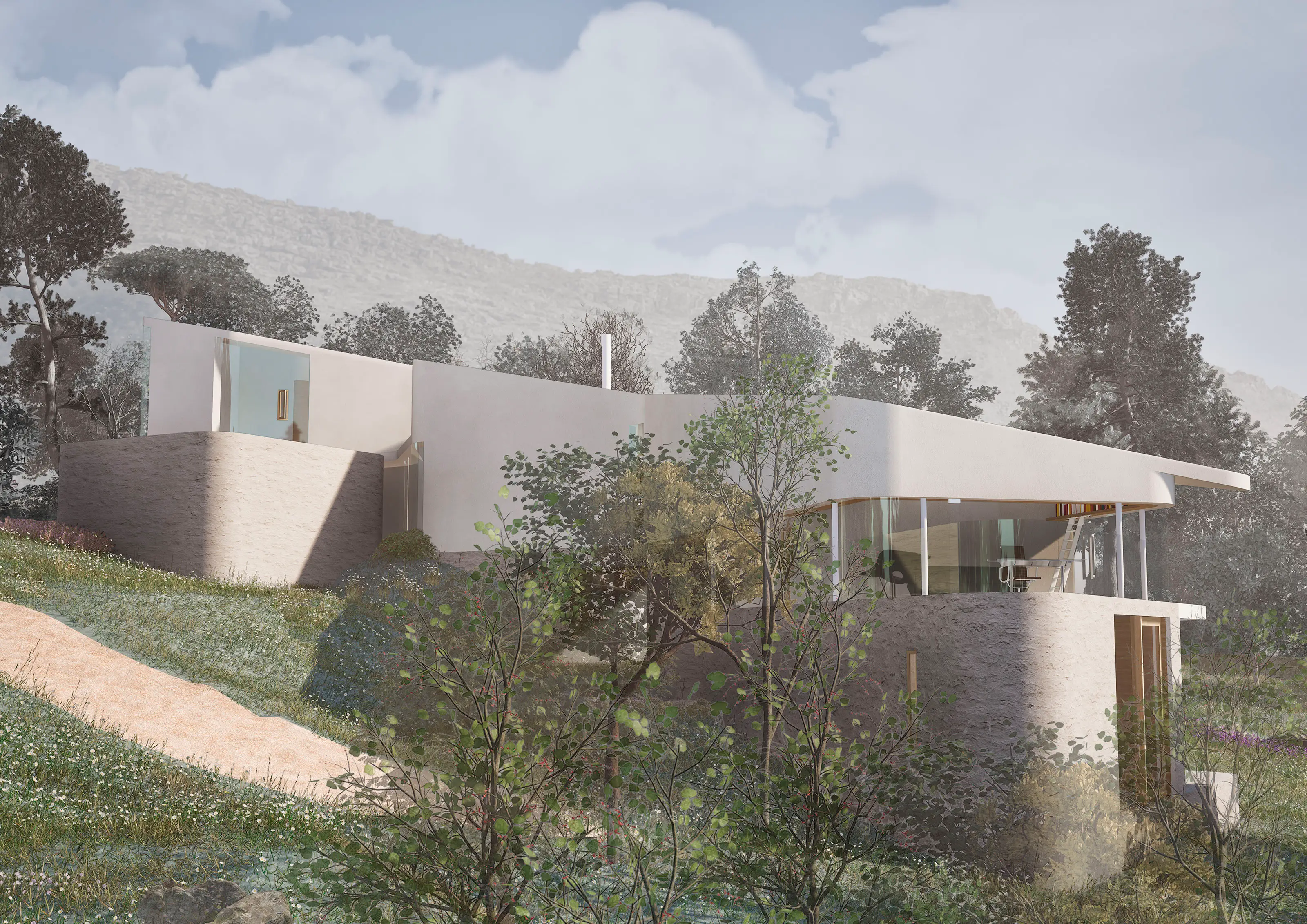
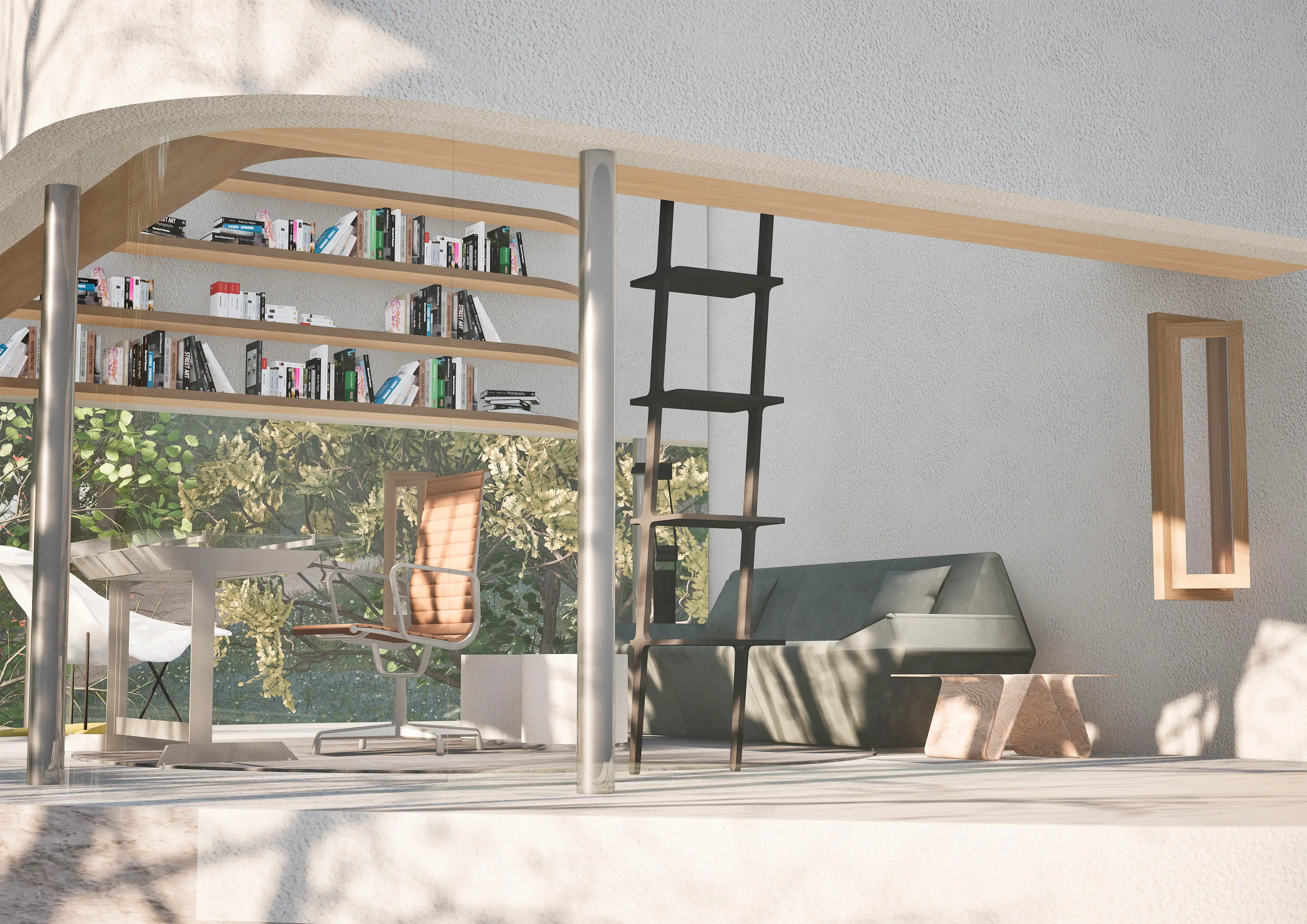
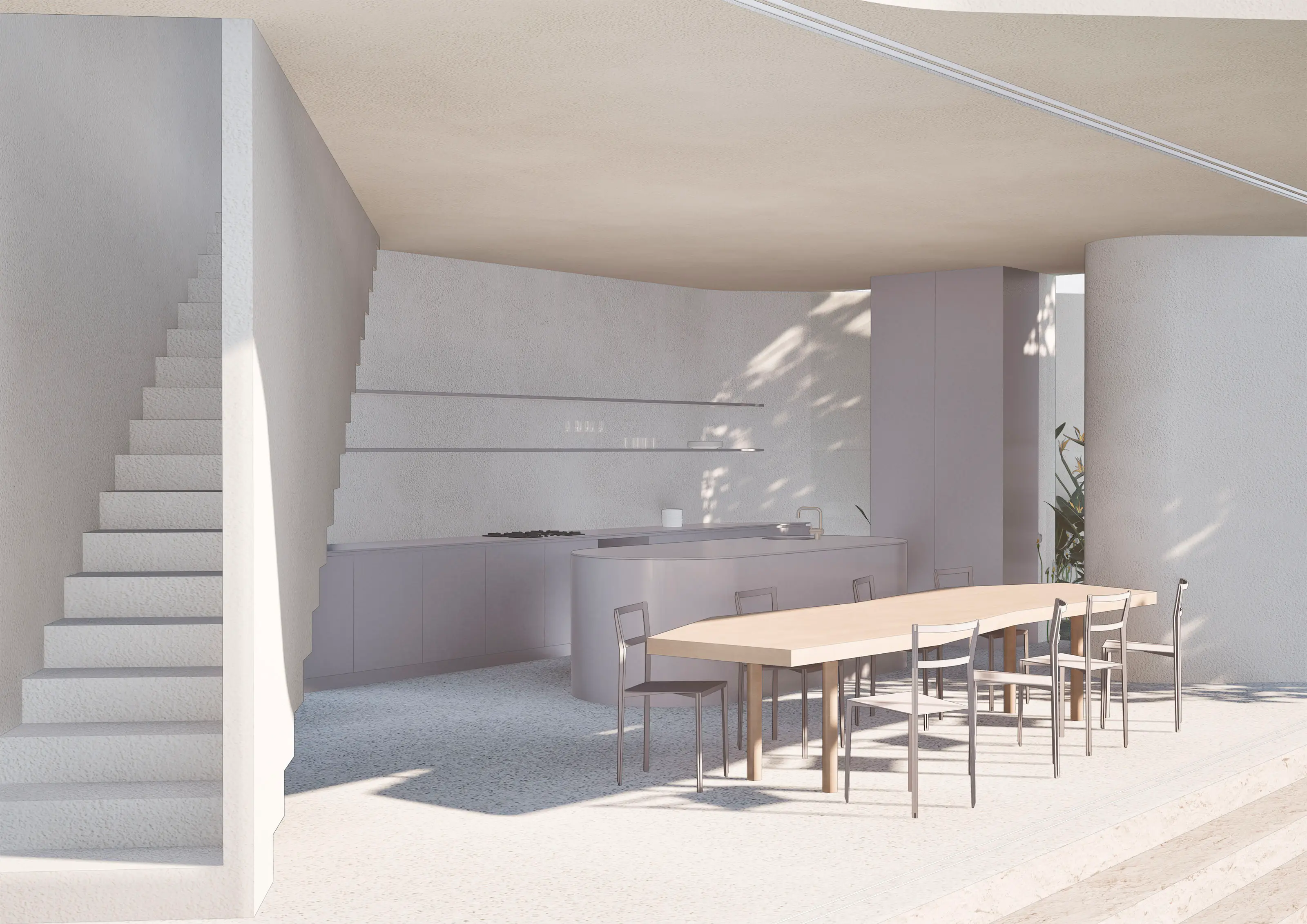
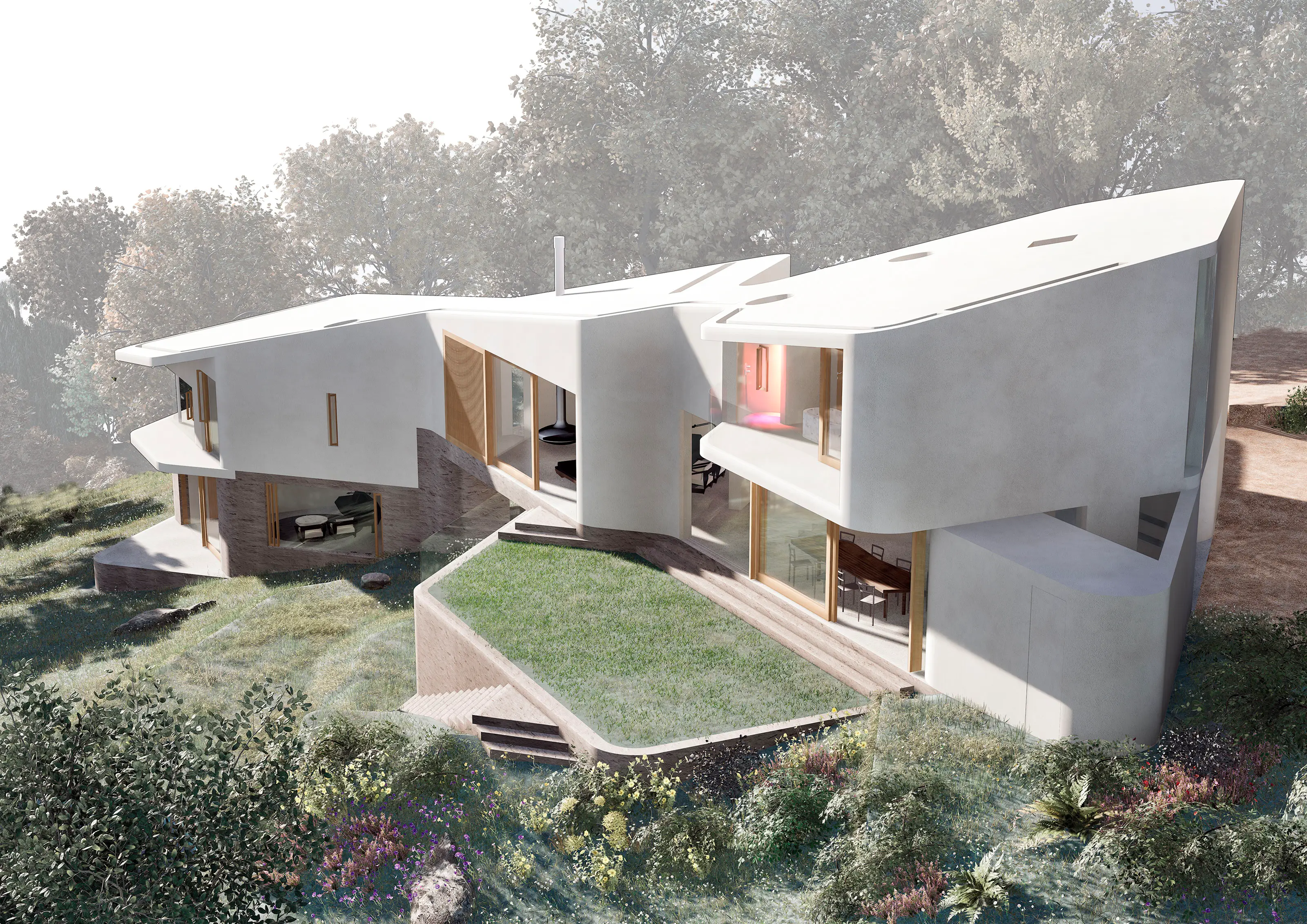
Swan’s Reach is influenced by three defining conditions of the site: a continuous 12-degree slope, a serpentine stream traversing the landscape, and mature trees that establish a sense of enclosure and privacy. By embracing these constraints, the house emerges from the atmosphere of the landscape.
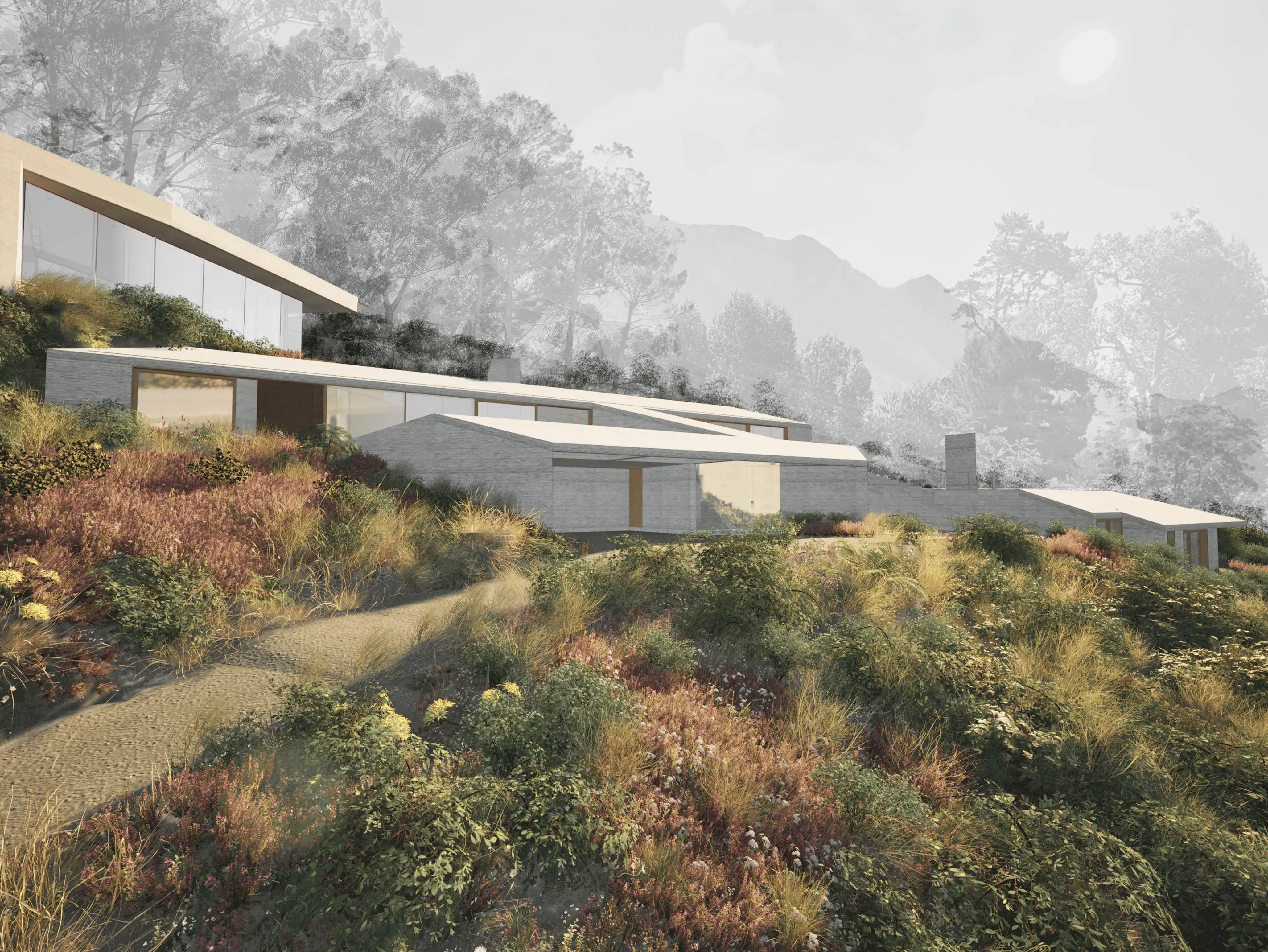
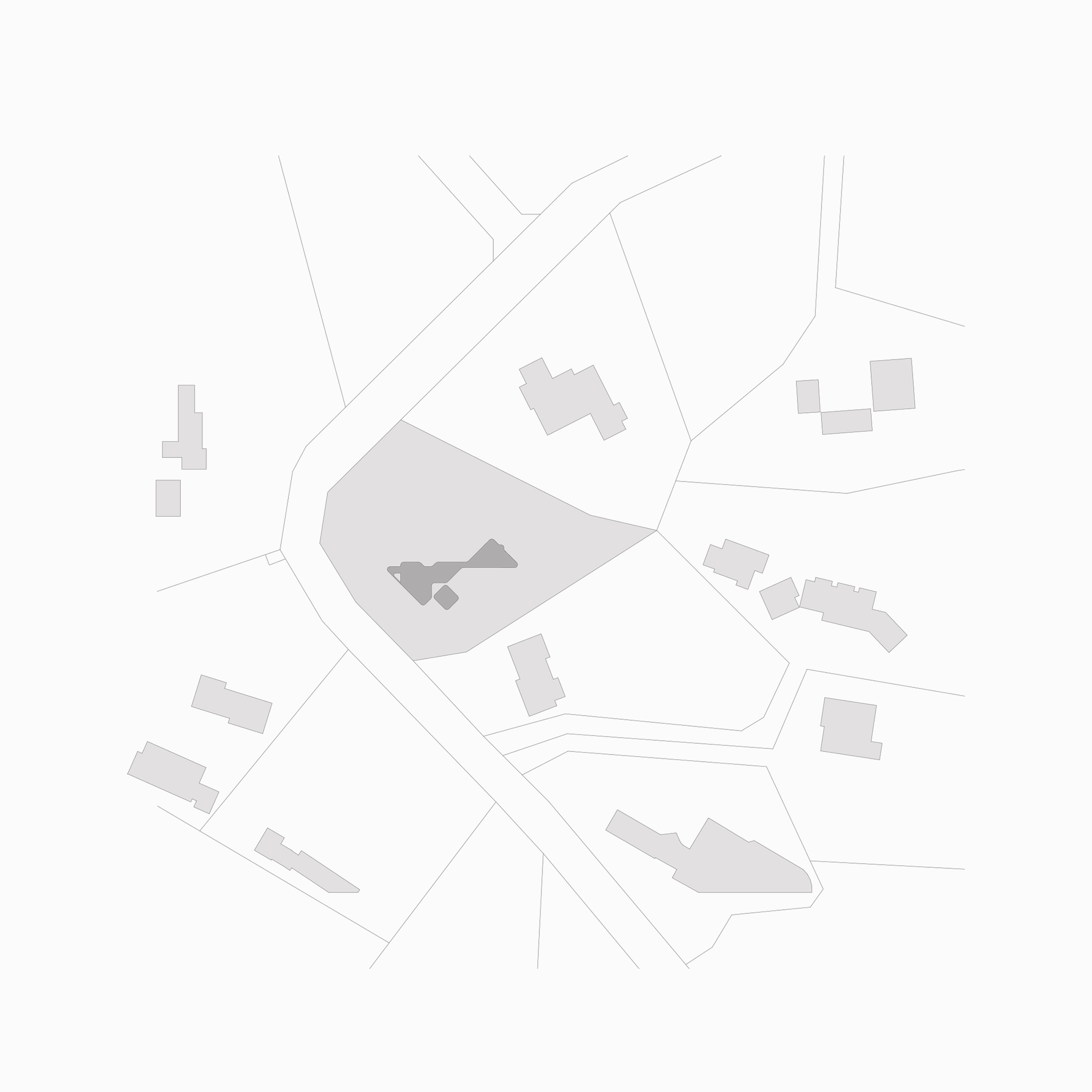
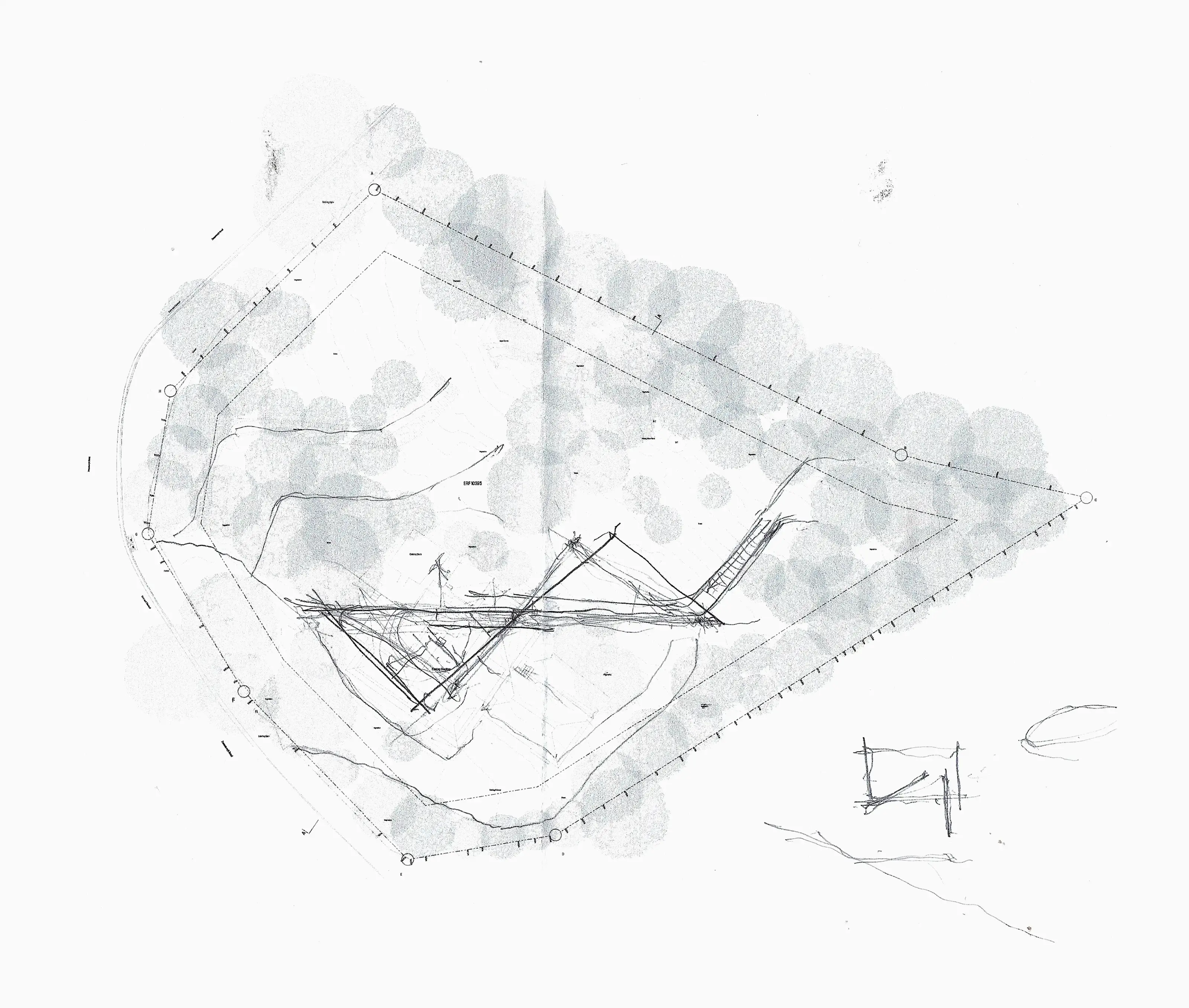
Positioned within a natural clearing, largely aligned with the footprint of the original structure, the house extends across and down the terrain in a manner that responds to the direction of the slope, the northern orientation, and the meandering stream below. The intention is for the building to feel embedded within the site and become a continuation of the landscape.
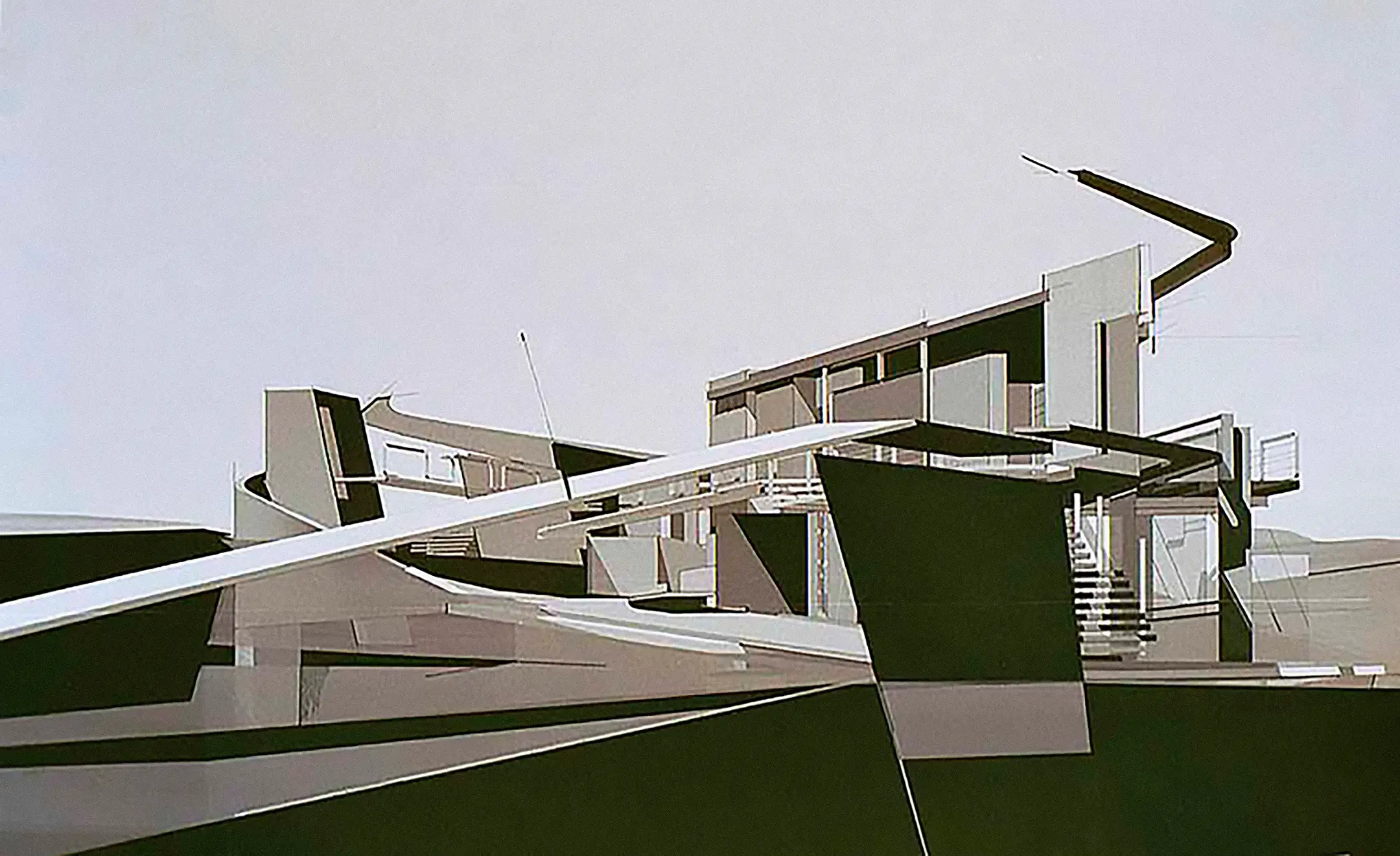
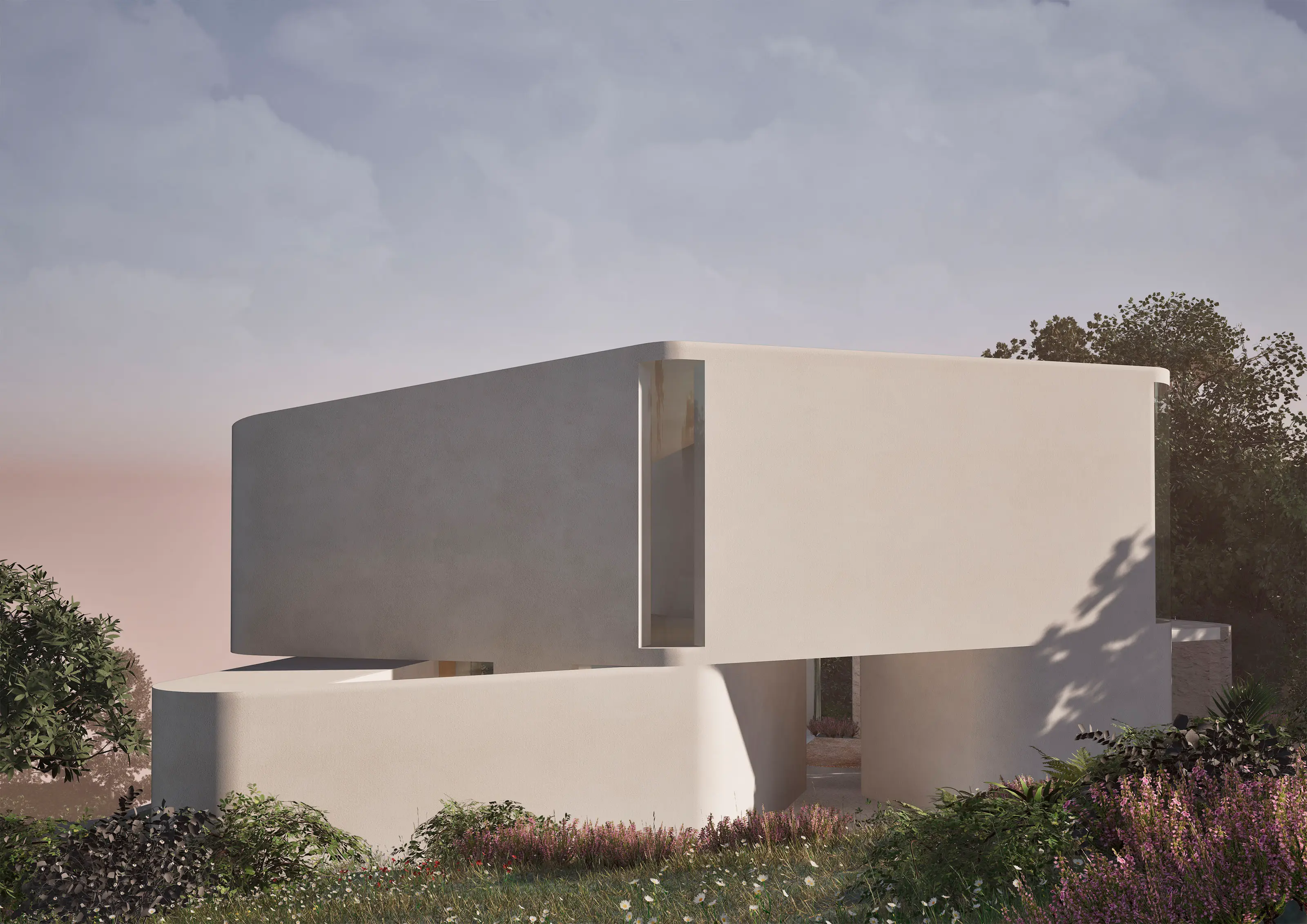
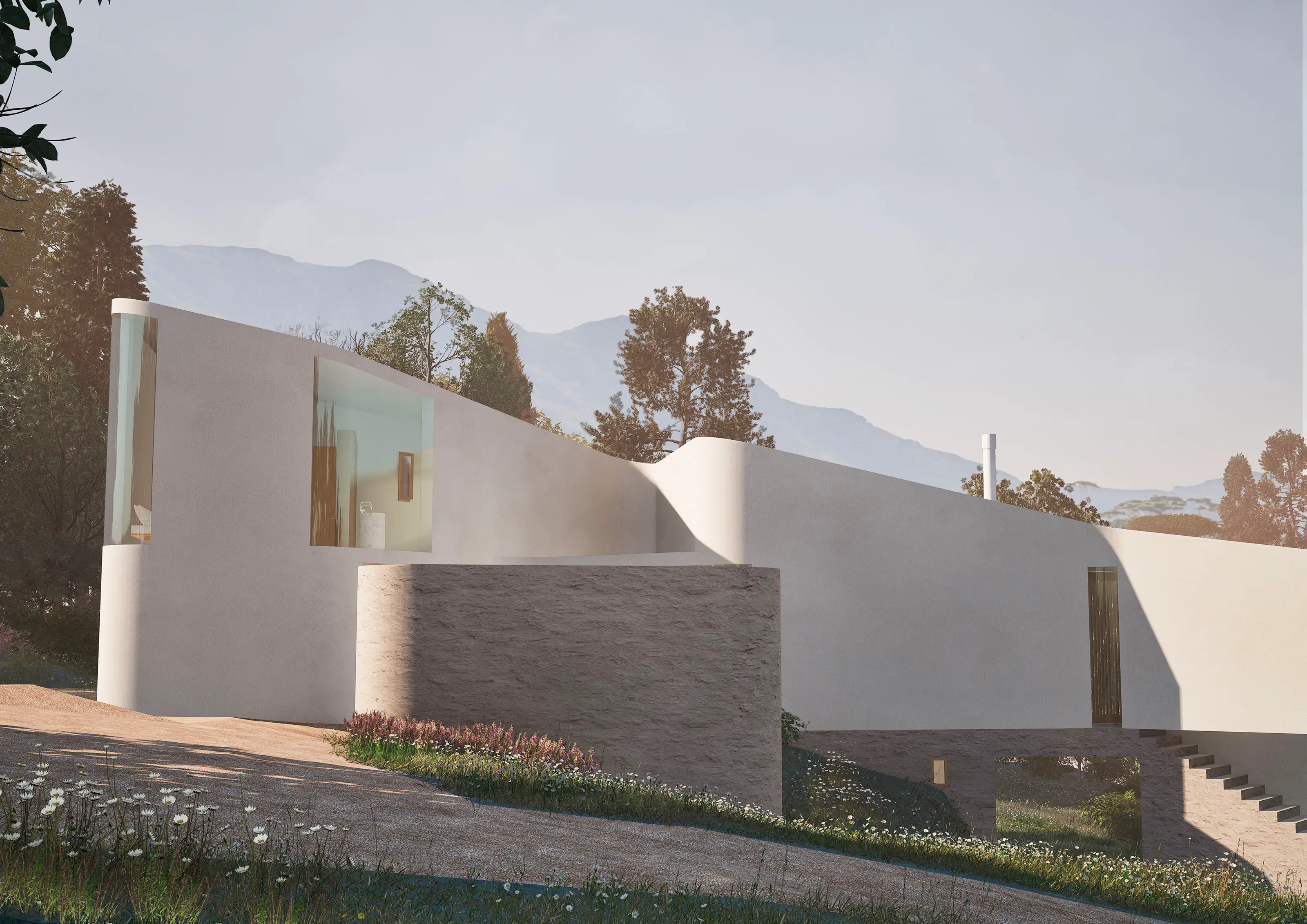
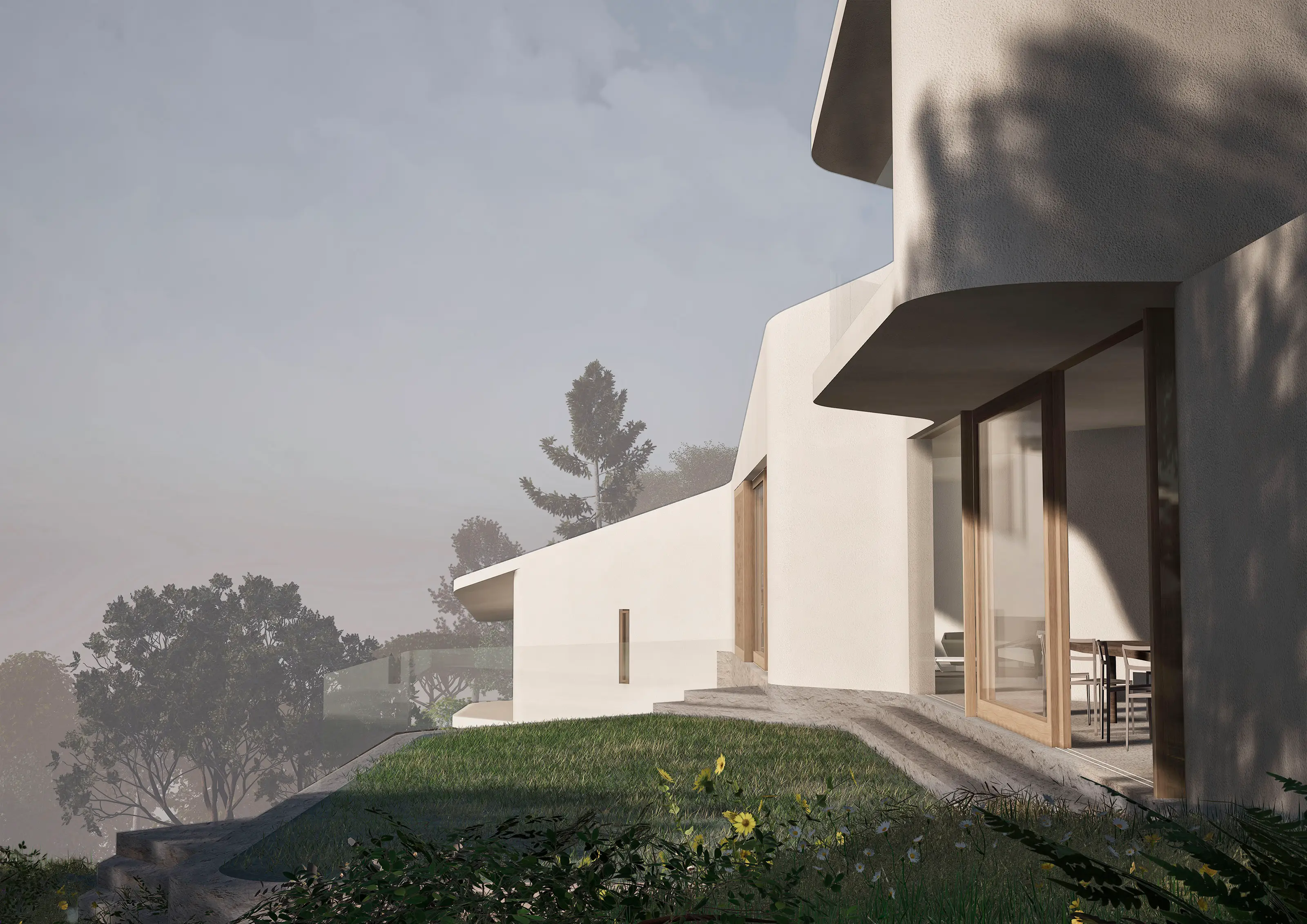
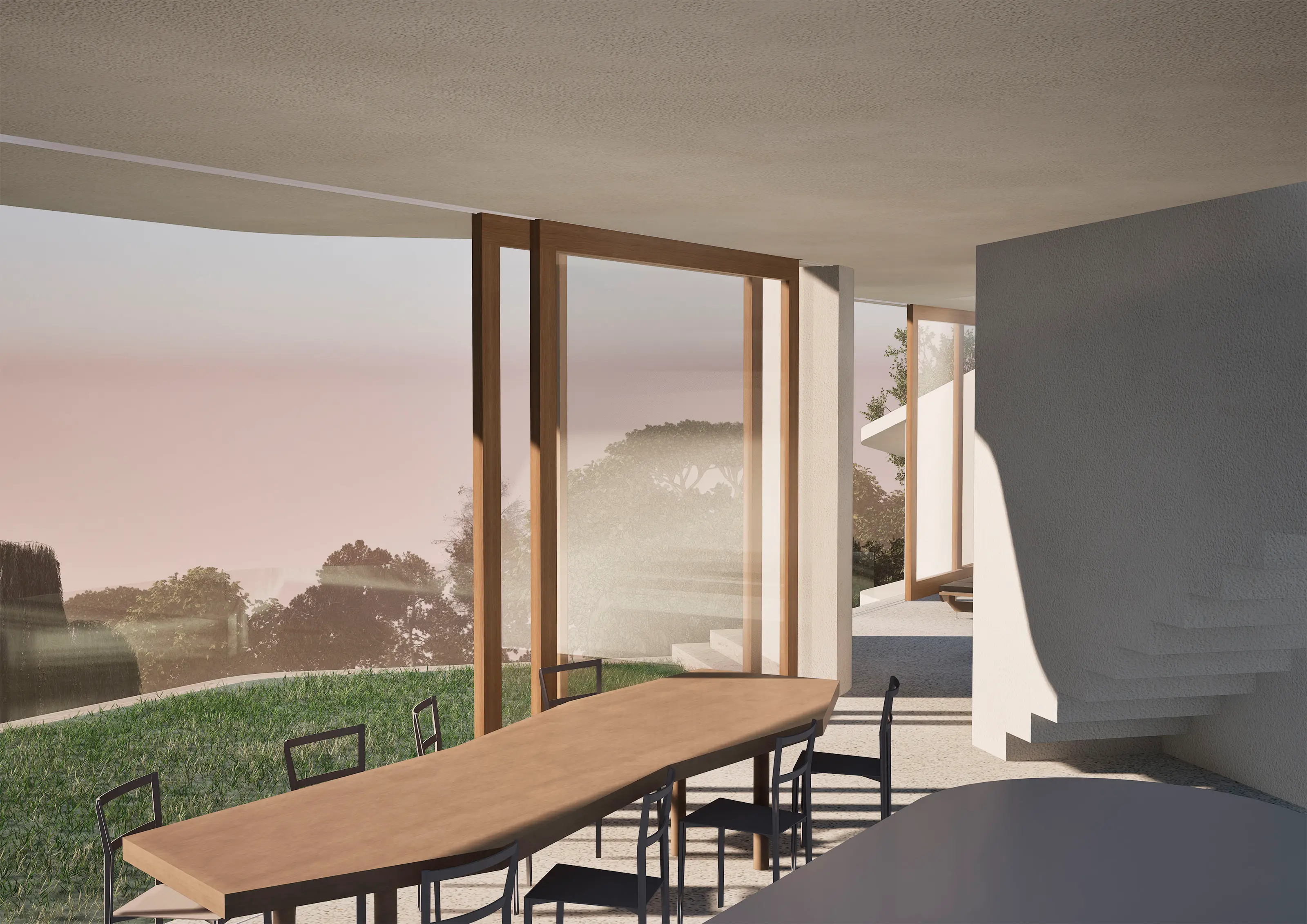
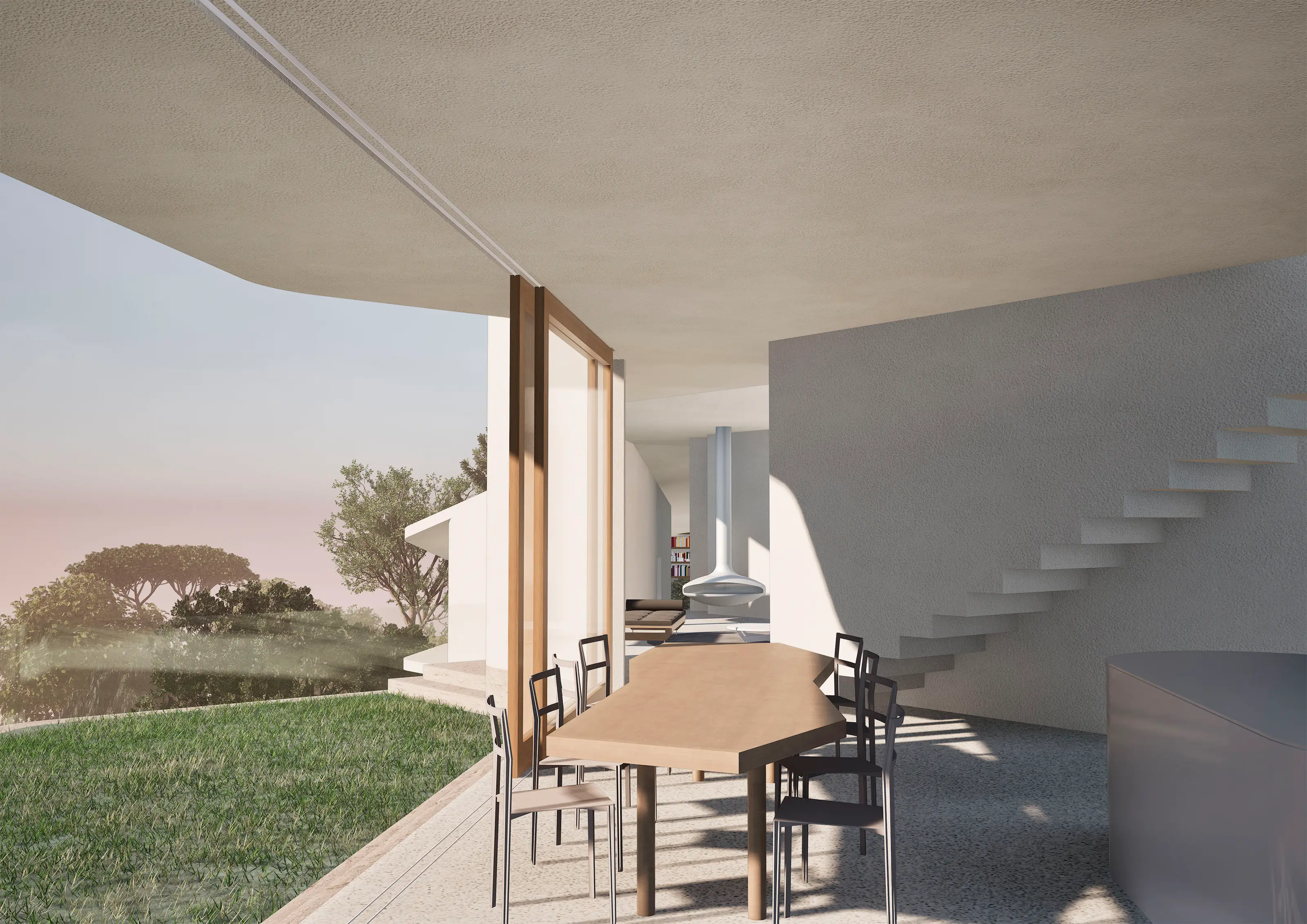
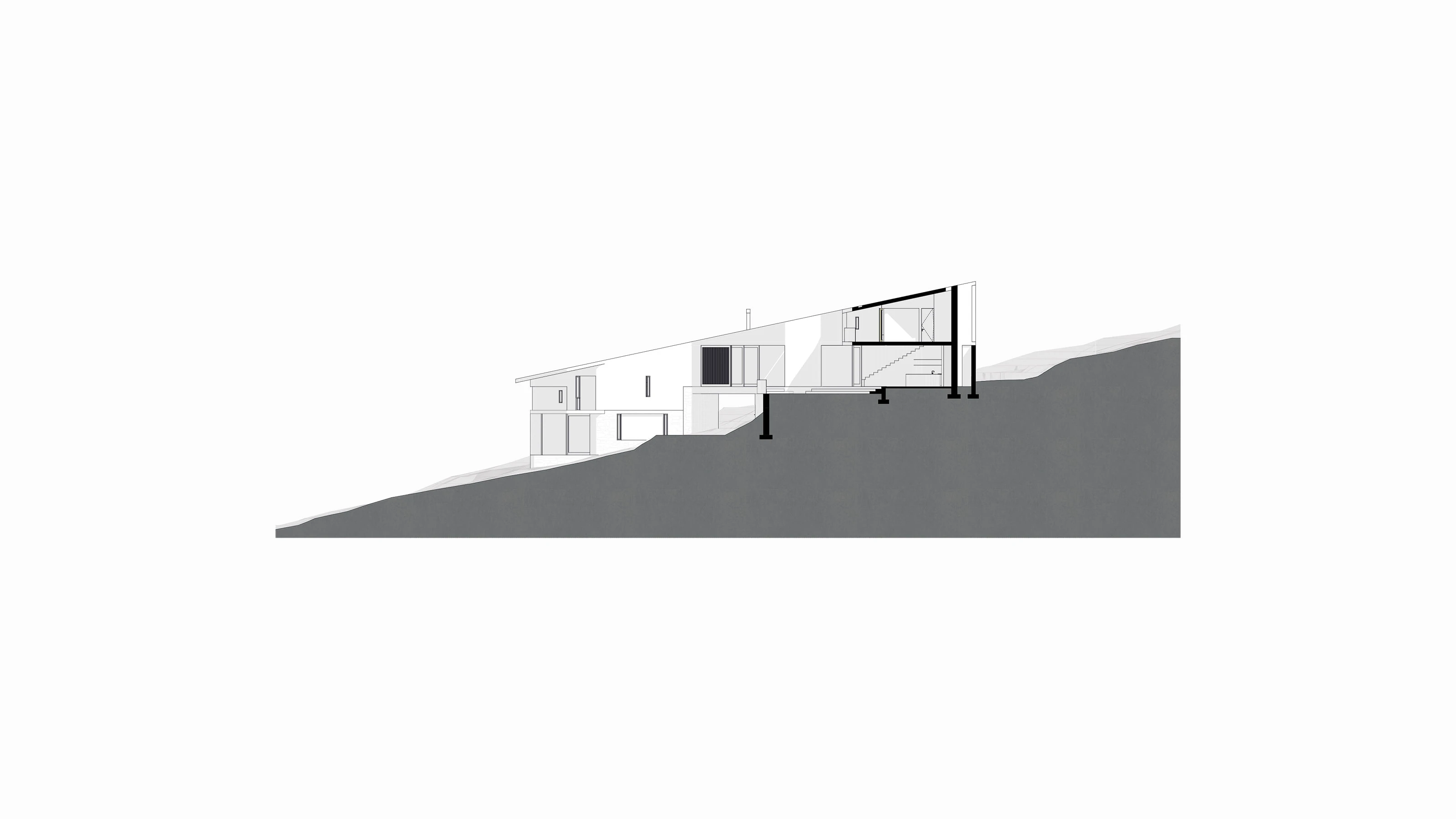
A continuous 12-degree sloping roof plane mirrors the incline of the terrain, enclosing the interior spaces beneath a singular architectural form. In plan, its soft curvatures generate a sequence of spatial conditions that shift between openness and intimacy, while curved glass corners dissolve the solidity of the building at key moments, creating a sense of spatial flow and continuity.
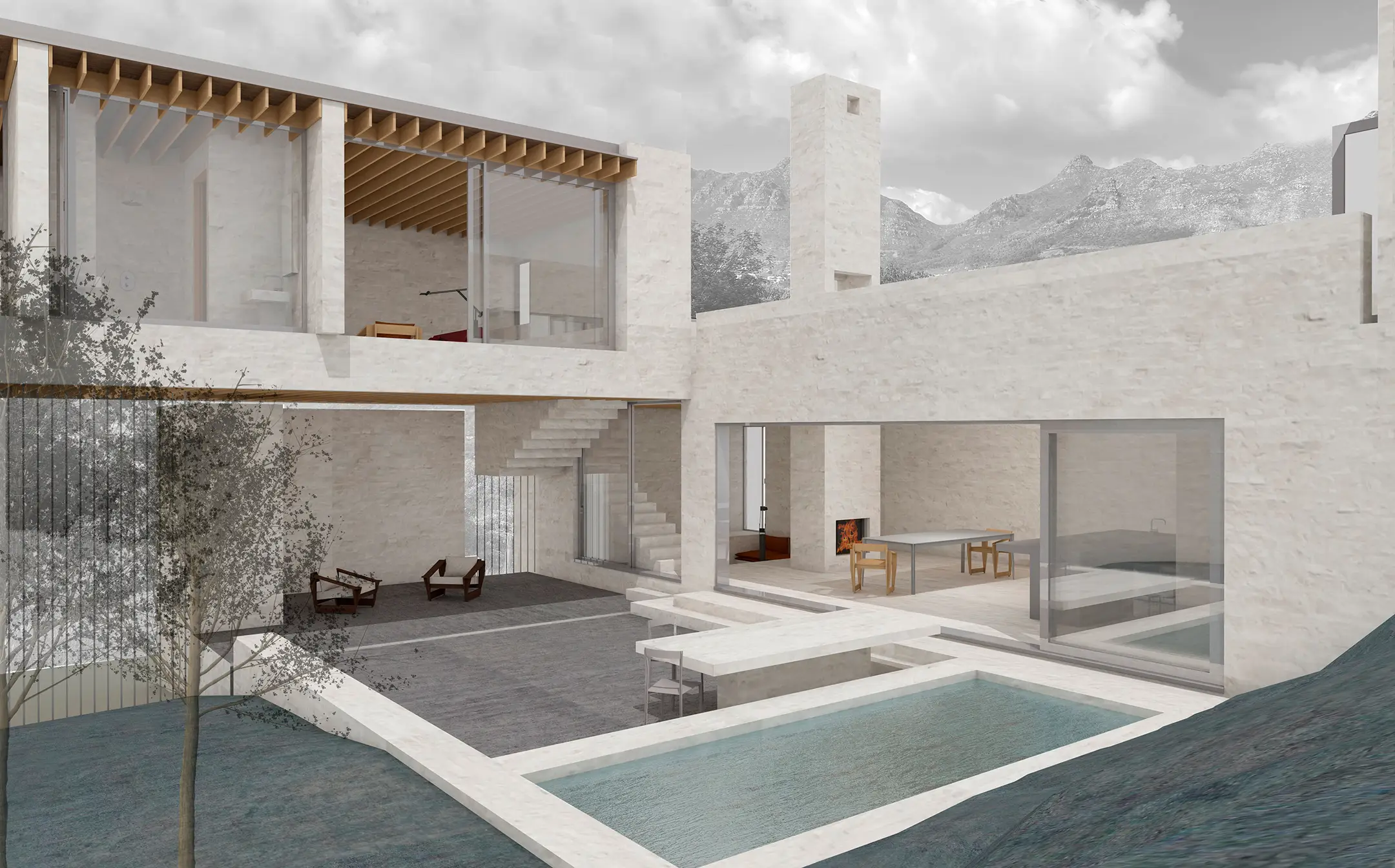
Materially, the house is grounded through the use of limestone rubble walls that anchor the lower structure. As a counterpoint to this, the upper levels of the home employ brickwork, mass timber, hemp block, and light- weight cladding systems, introducing warmth, tactility, and environmental performance. This hybrid approach seeks to balance the permanence and familiarity of traditional South African construction with the sensibility of more progressive biogenic building technologies.
The house traces the movement of the slope, undulating in plan and section. Skylights and carved roof volumes bring light deep into the plan, creating subtle shifts in atmosphere and scale throughout the home. Protected from prevailing winds, the living spaces open toward the north-facing terrace and gardens shaded by the existing trees, before descending toward the lower landscape and circular pool beside the stream.
The house is conceived as a series of spatial experiences shaped by movement, changing light conditions and the rhythms of inhabitation. Its elongated roofline follows the fall of the terrain almost as a landform, while the curved edges and softened geometries allow the building to sit confidently within the garden. The architecture aims for a sense of calm permanence: a home defined by light, proportion, materiality, and an intimate relationship to its surroundings.