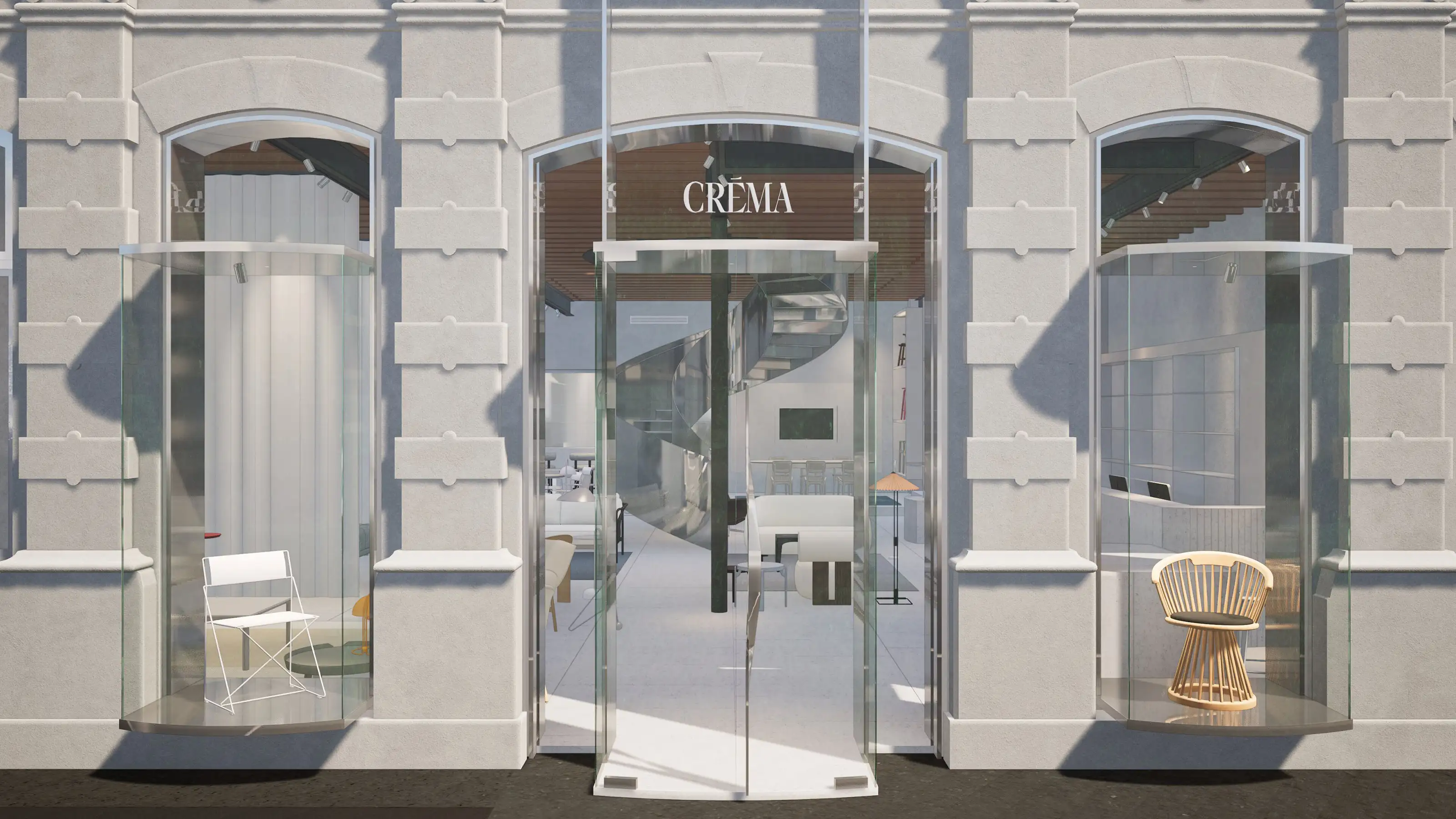
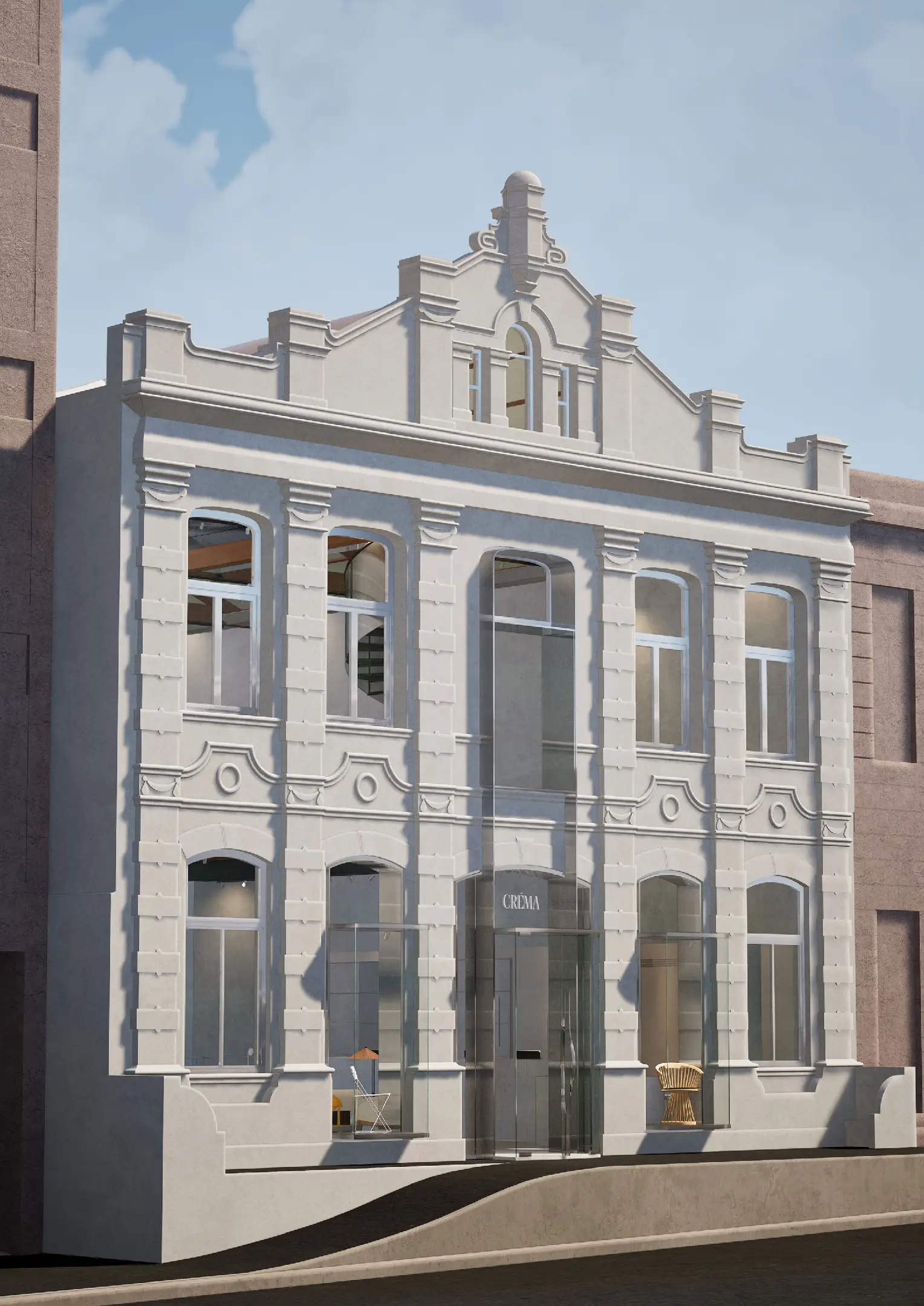
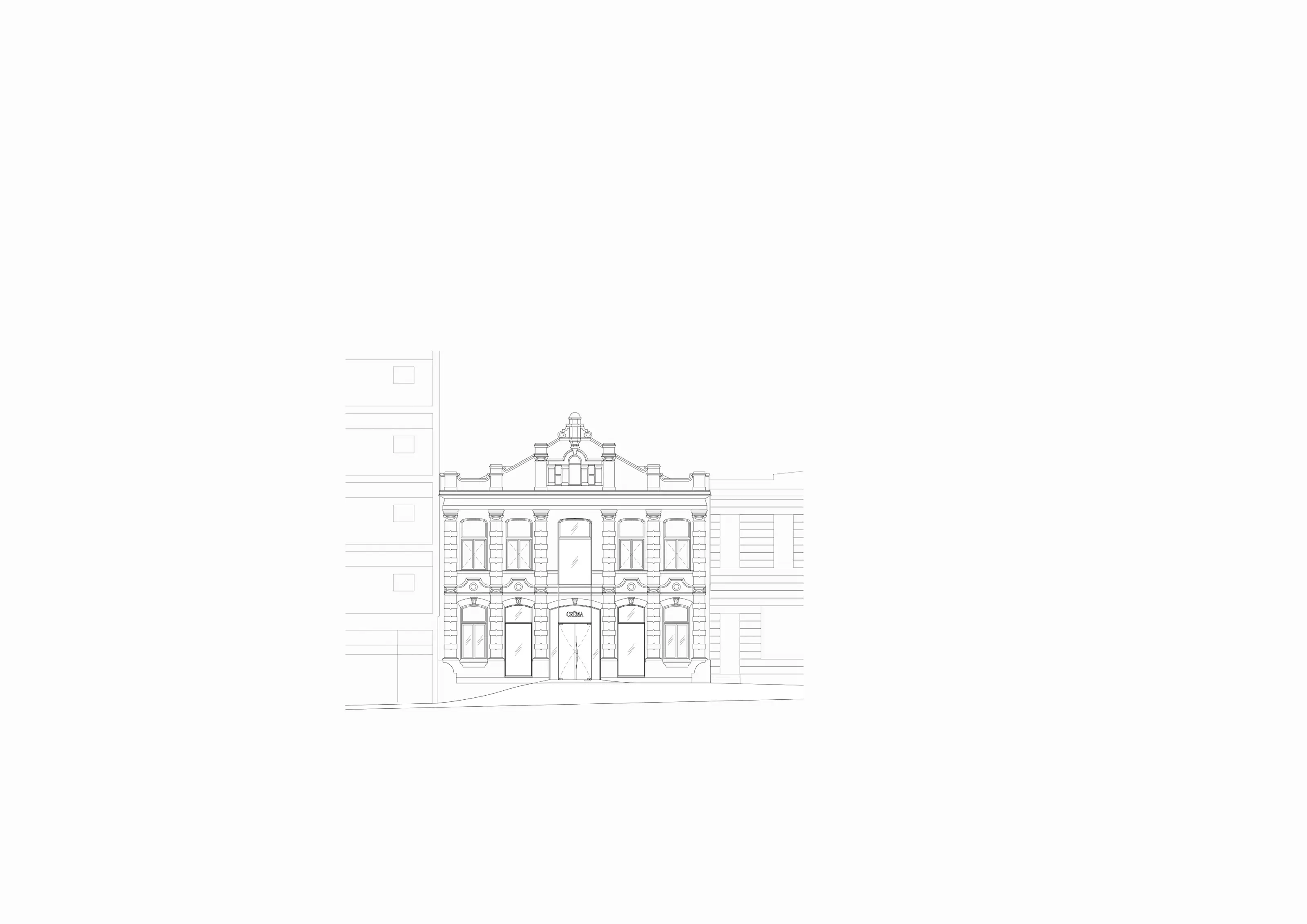
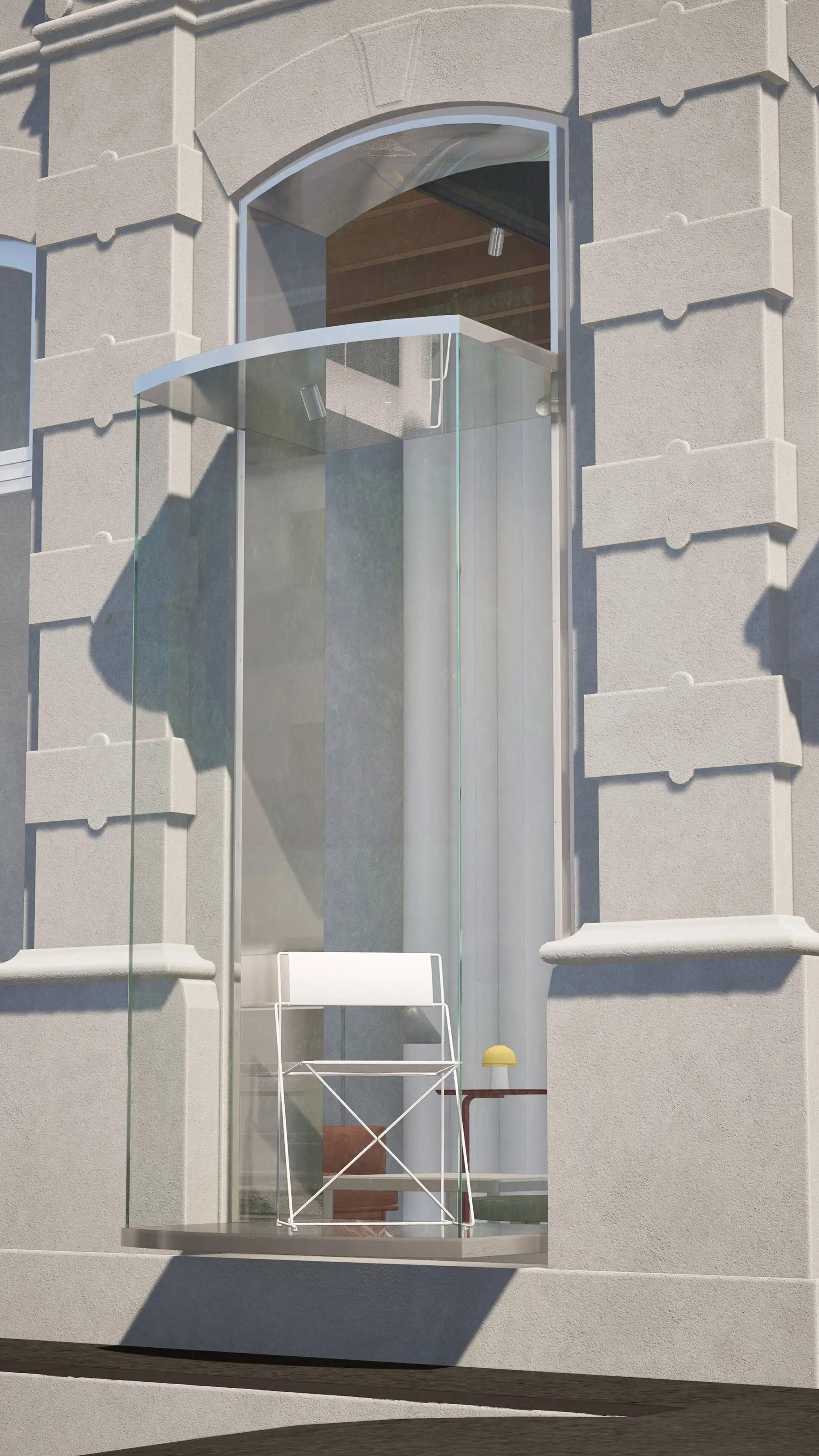
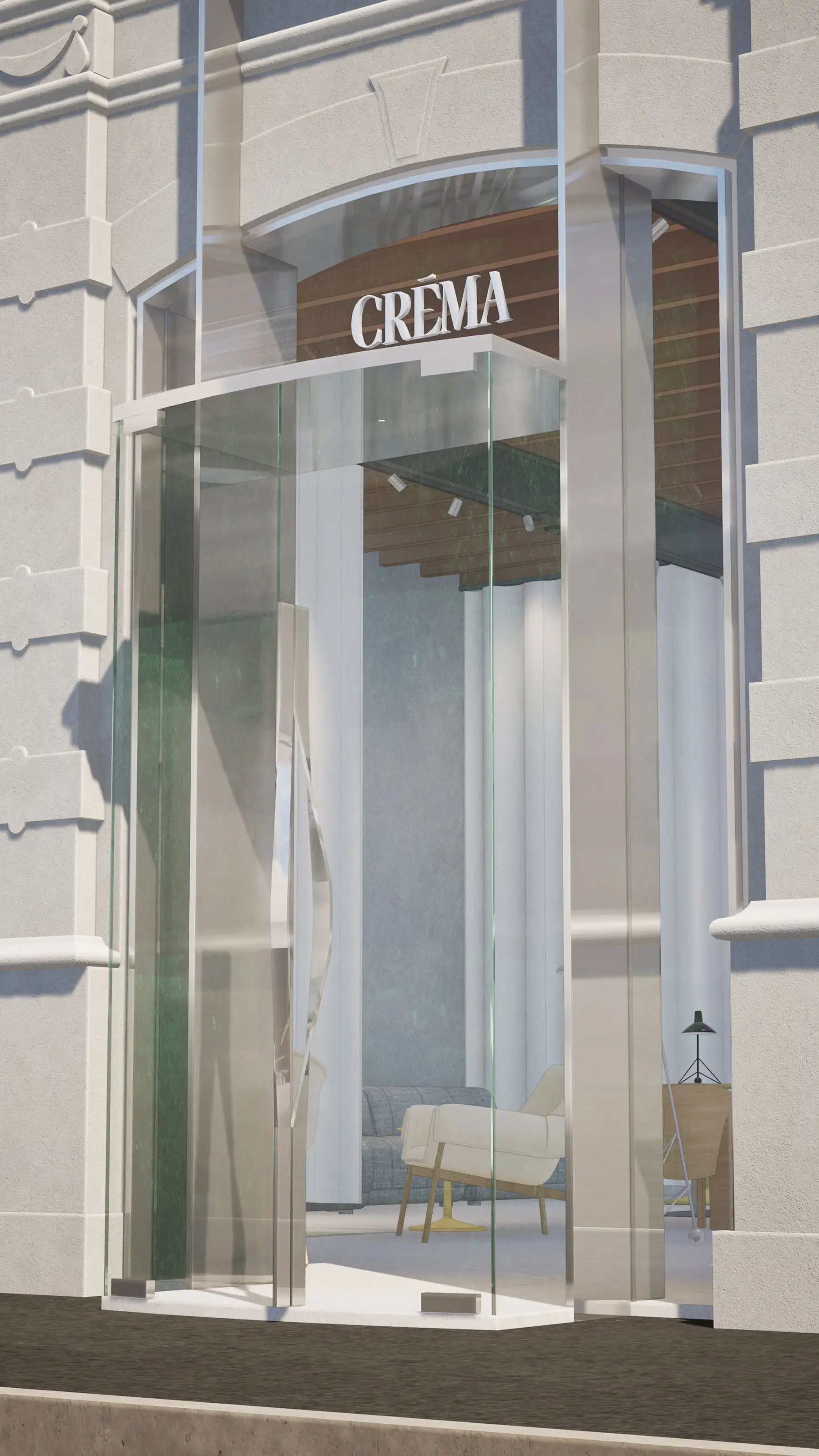
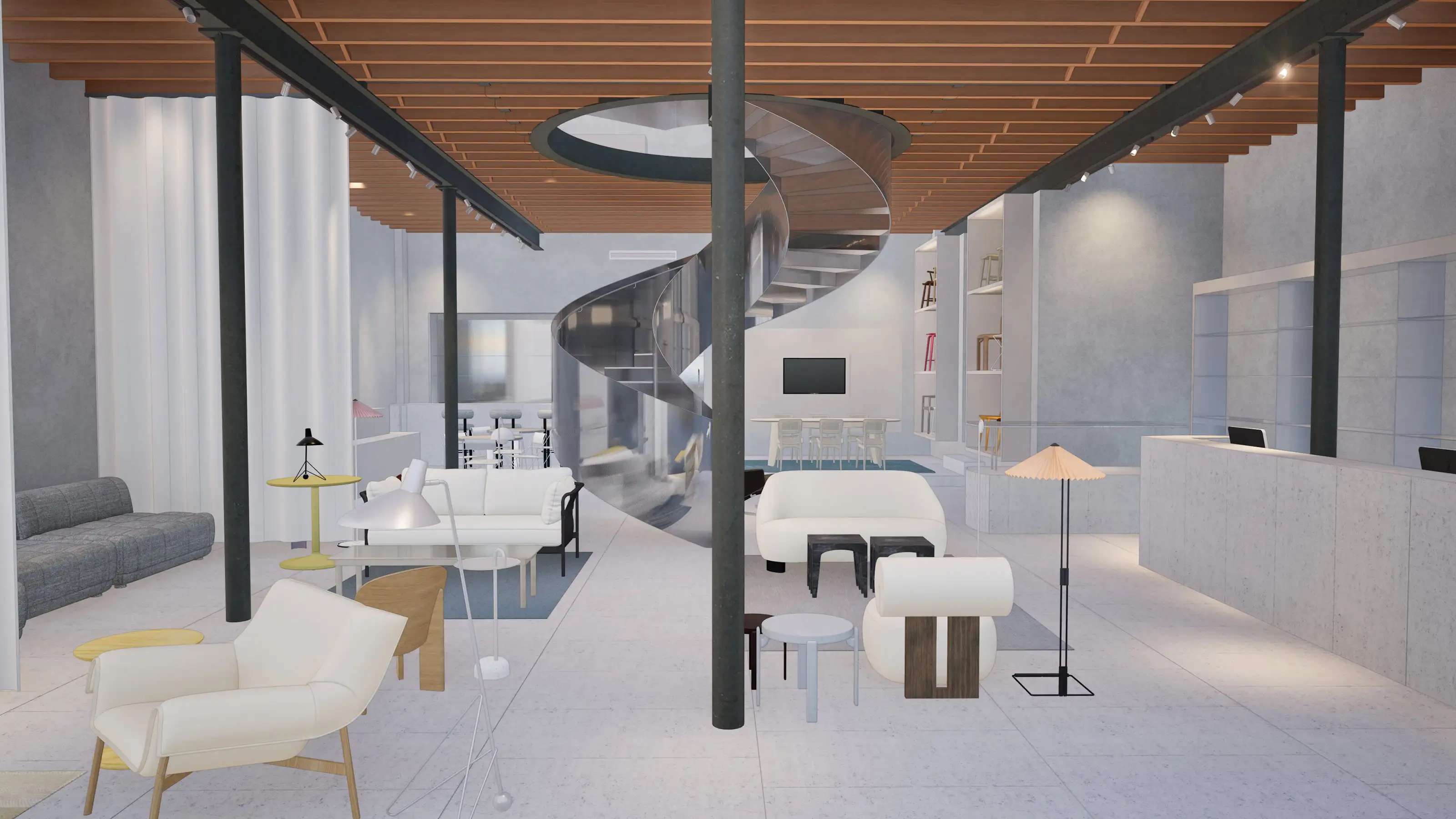
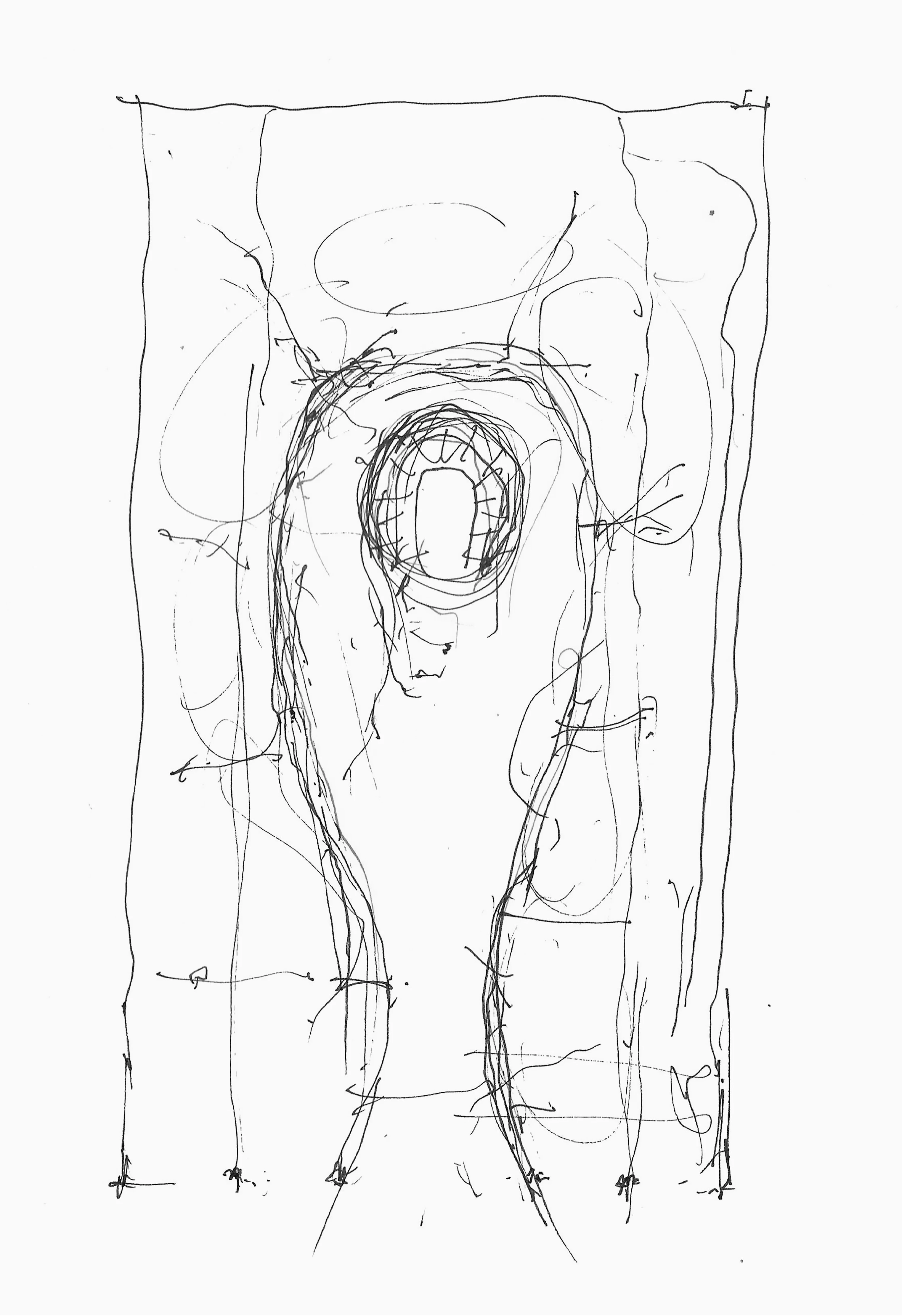
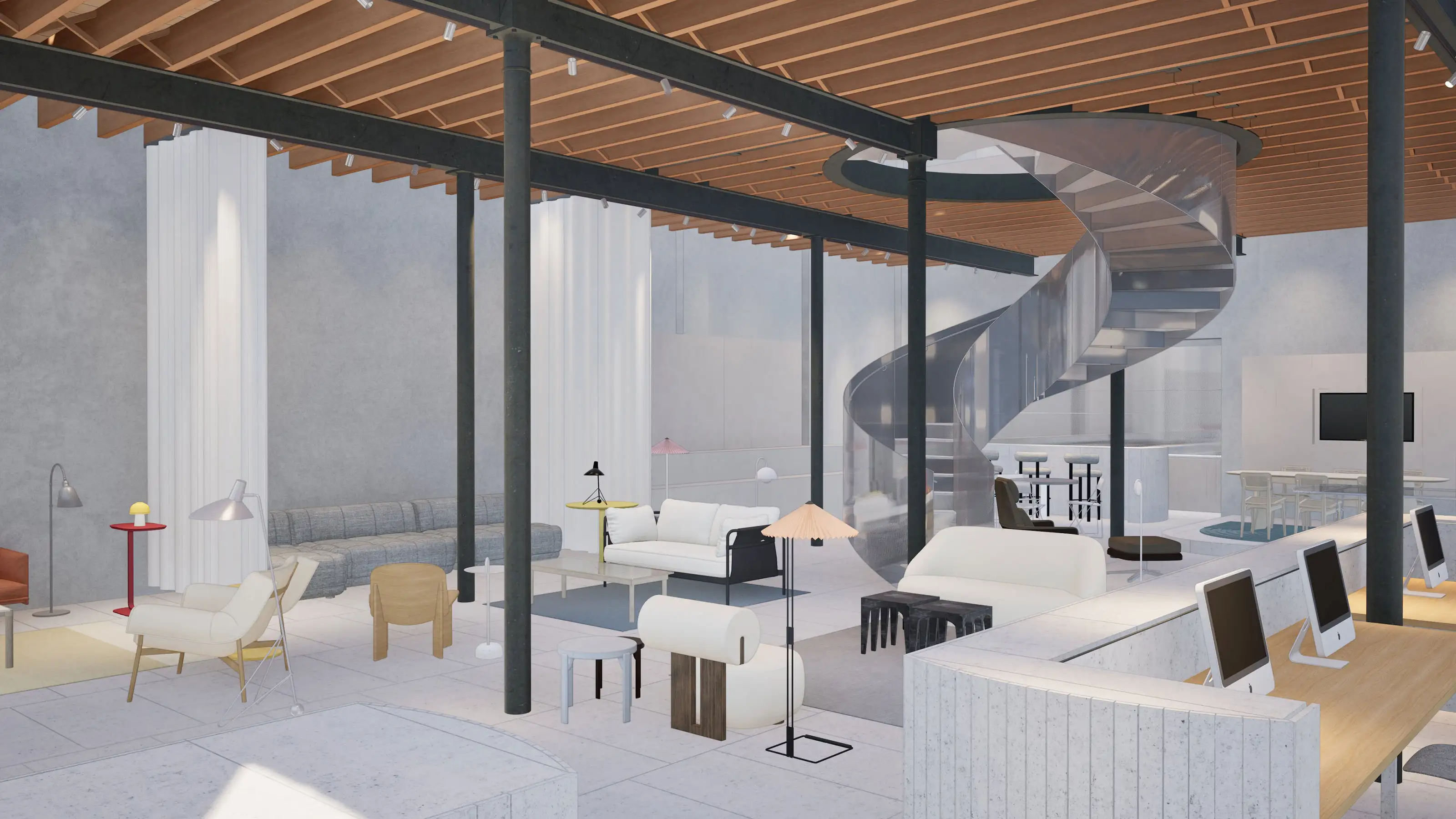
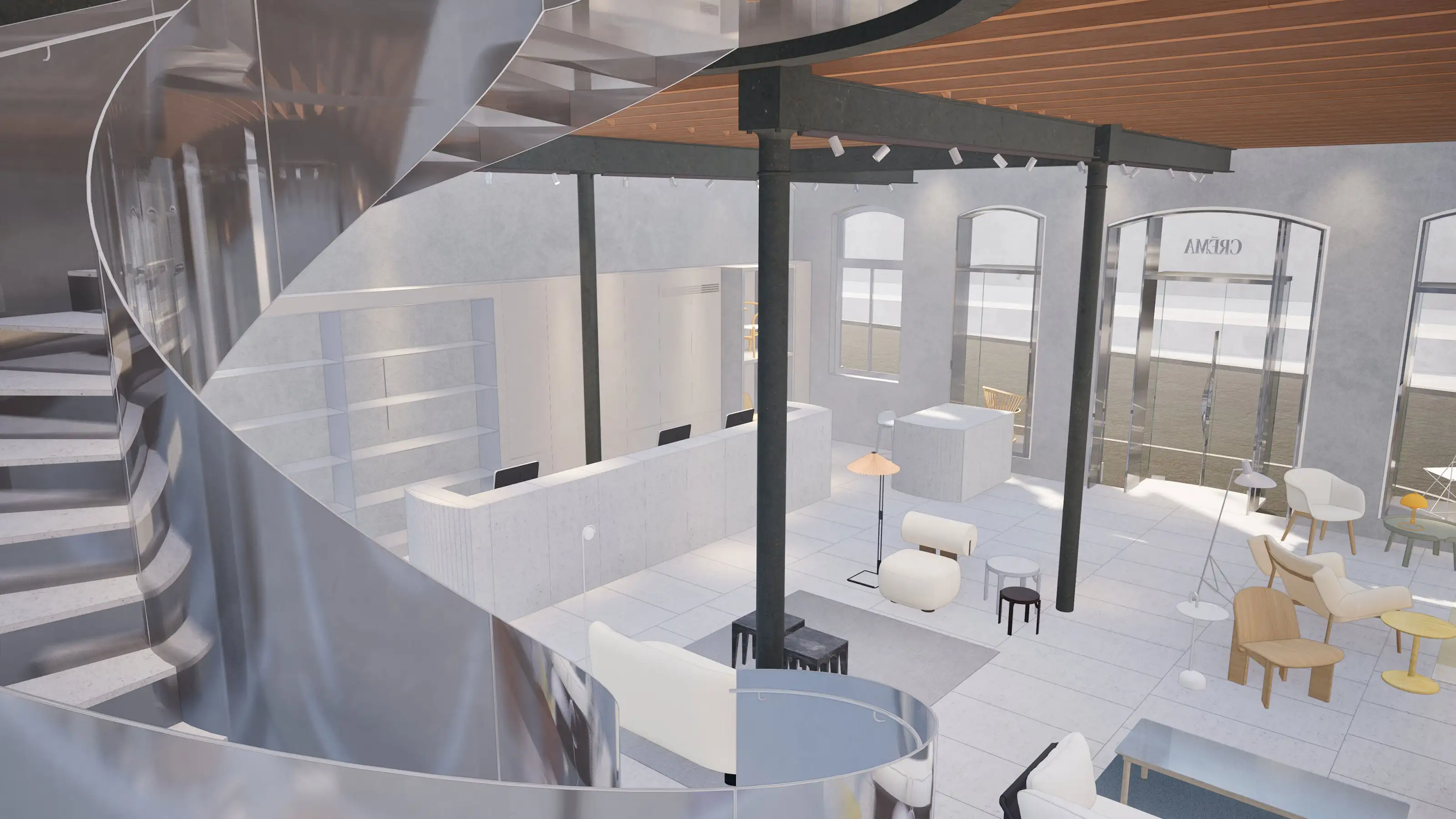
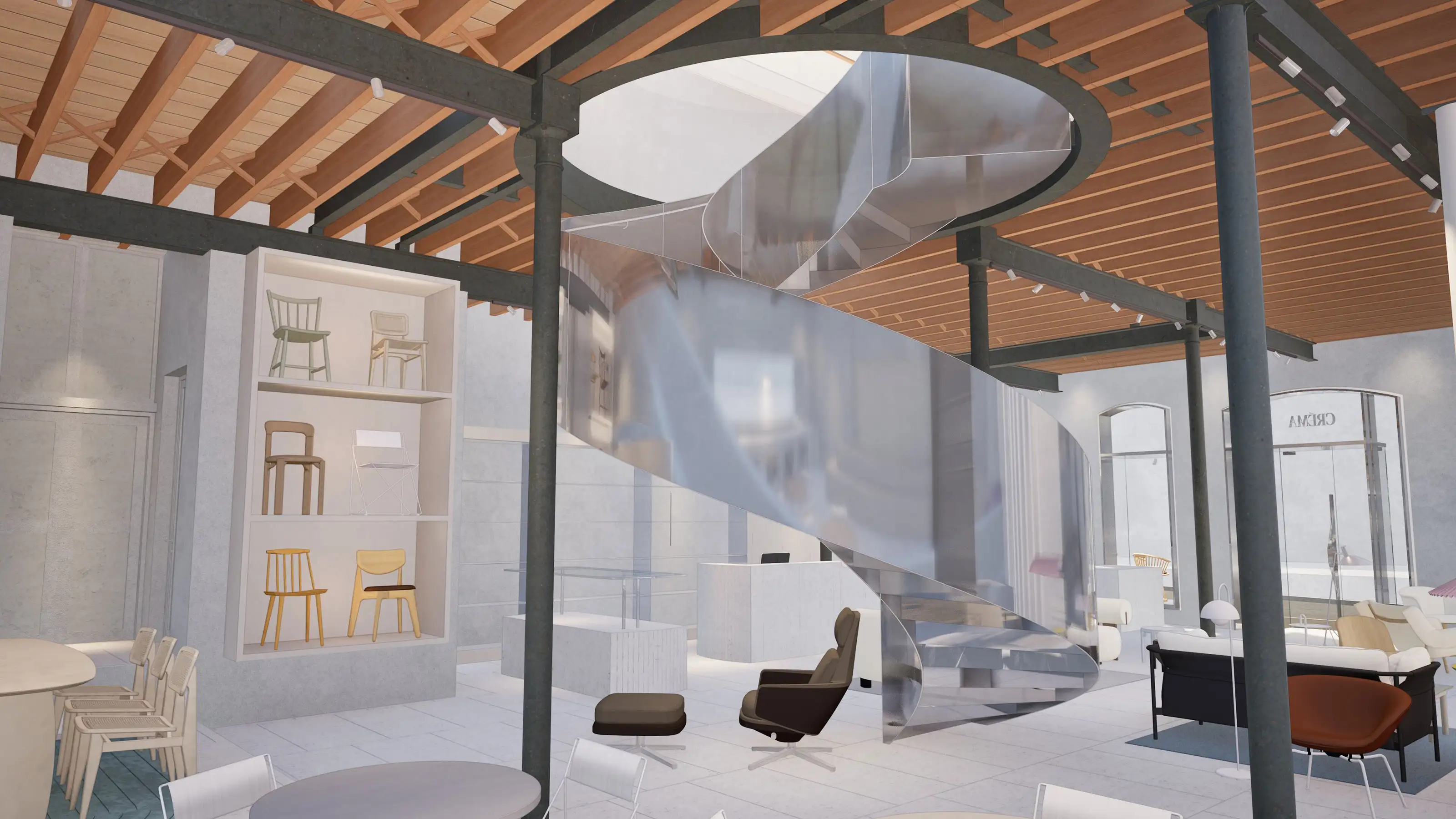
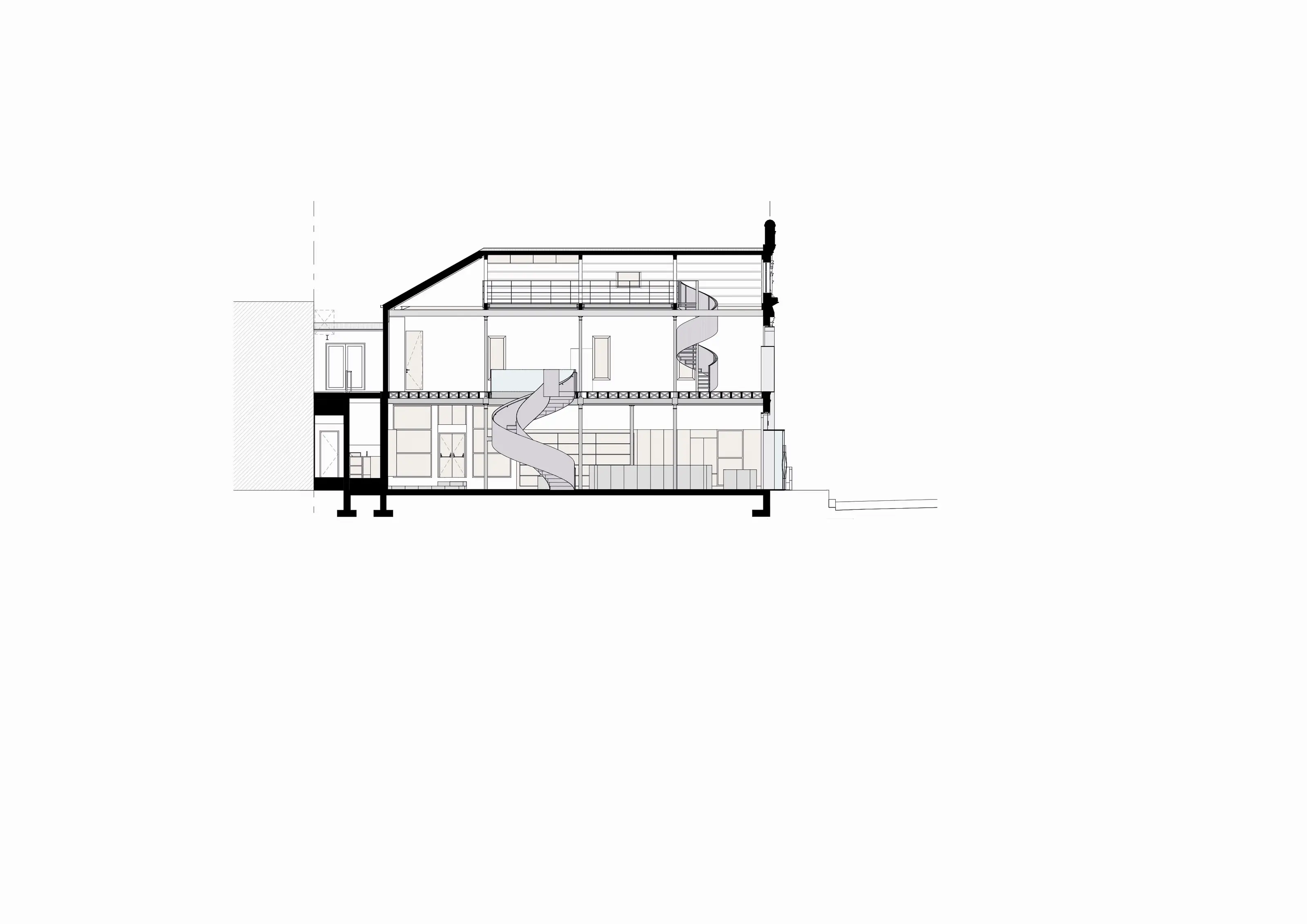
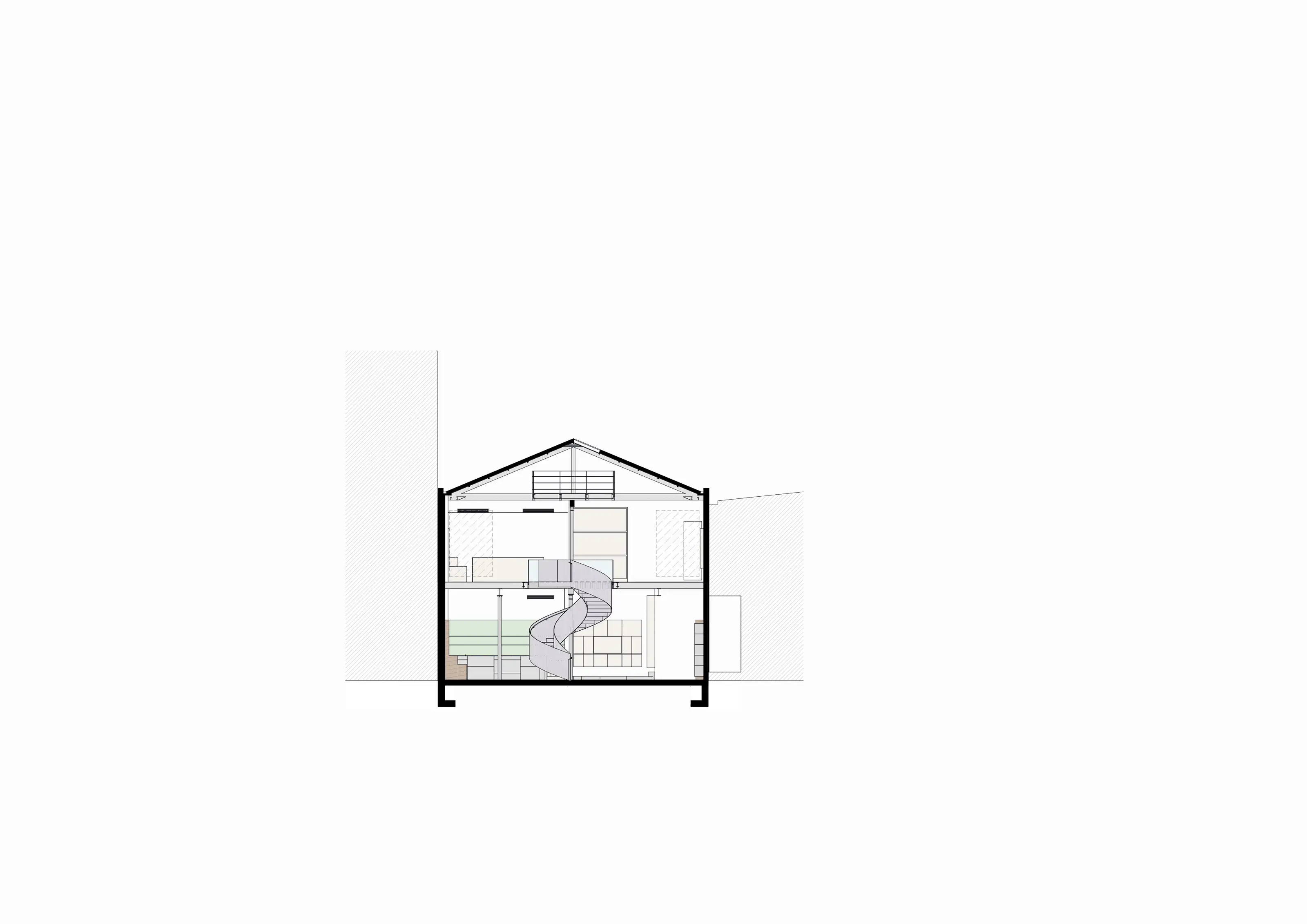
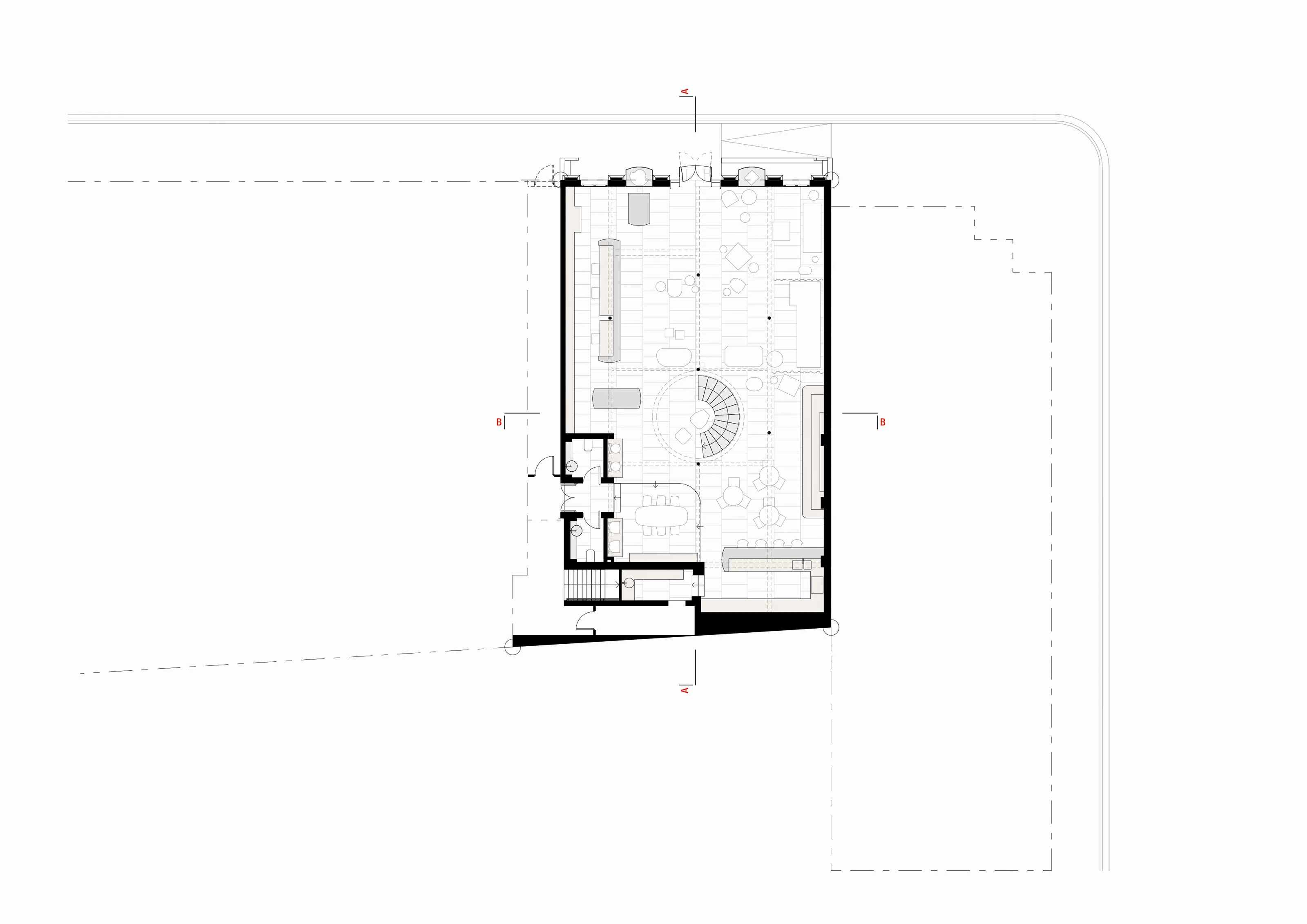
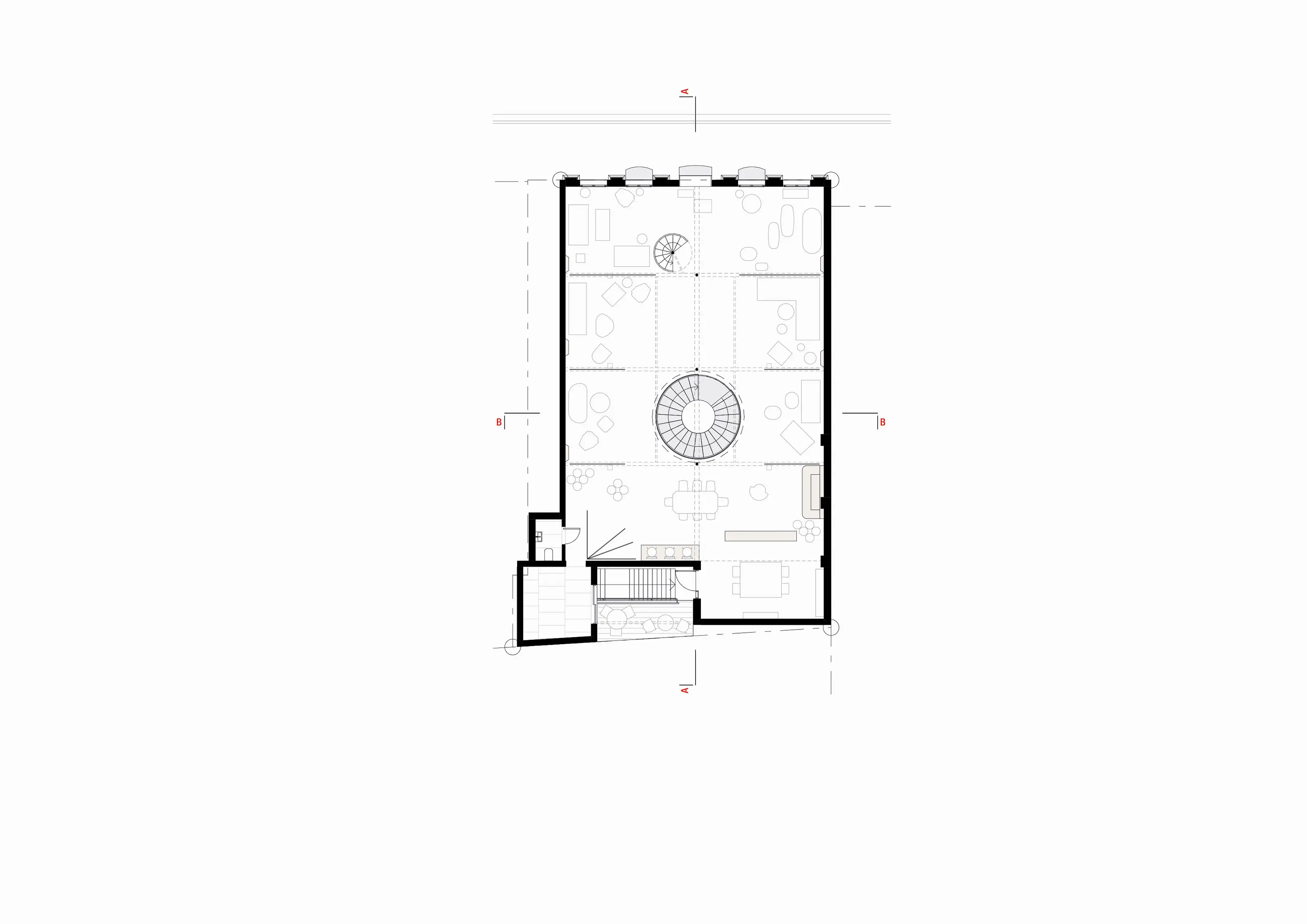
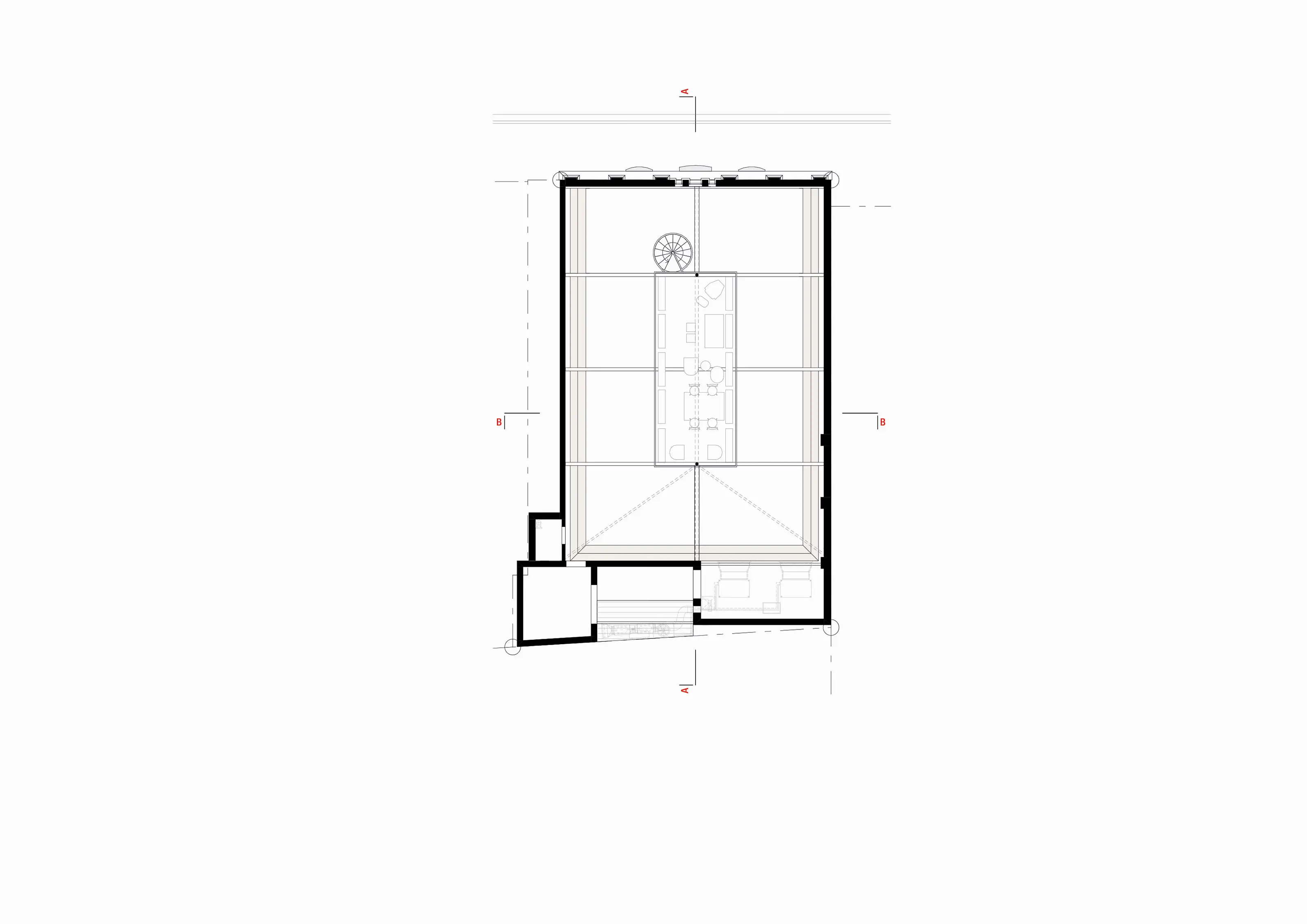
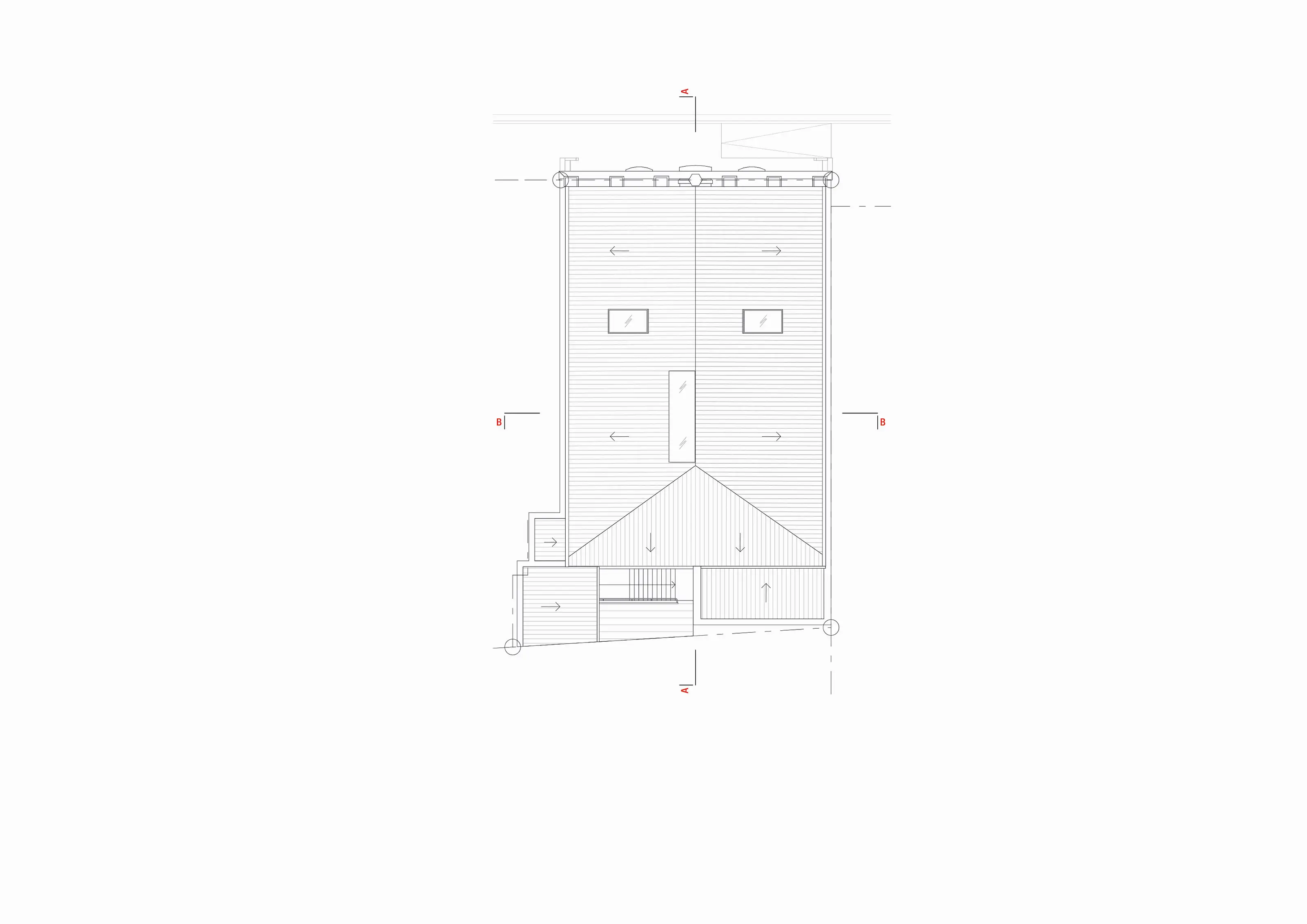
This project involves the adaptive re-use of an existing open warehouse building originating from the mid 1800's into a showroom for Crema Design, a well-known local importer of European and North American furniture and lighting. The building would seem to have been altered a number of times over the past 160 years and thus demonstrates a degree of layering that would be expected from a building of this age, with a concomitant loss of some of the original fabric. The subject site has been graded IIIB on the City of Cape Town's heritage database and is located within the Central City Heritage Protection Overlay Zone. The major design challenge of the project is the need to showcase their furniture along the street edge, within a delicate and intact façade. The original structure has a rectangular footprint, is double storey and has an ornate, 5 bay façade with plastered pilasters and projecting bands, and a street-facing gable. Internally, a slender steel structure (ground floor columns now encased in concrete) supports an exposed timber floor, while above a simple, double pitched corrugated iron roof encloses the building. The front stoep is raised above the pavement level, presumably to function as a loading bay when the building was used as a foundry. Given the importance of maintaining the delicate plaster facade and considered openings, the major changes to the external facade are proposed to the bottom and central openings. The doors and balcony were removed from the central opening (not original fabric) while the transom and fanlight of the upper opening which were considered to be original, were retained. A thin, stainless-steel frame was added, projecting 660mm from the facade, to create a small entrance alcove on the lower level, and a large shop window on the upper. The two windows closest to the central door were replaced and made longer (sill dropped to the plaster skirting) to create protruding stainless steel and glass vitrine windows. This device increases the visual permeability in the street-facing facade to accommodate the intended showroom use and allow for product display. The restored facade with its original intricate architectural features as well as new contemporary windows create visual interest and add value to the pedestrian experience along the street, contributing to the unique urban design and historic layering of this streetscape. Internally, the major intervention is the insertion of a large centrally positioned circular stainless steel staircase traversing the 4,7m ground to first floor height difference, a gesture which instils a sense of ambulatory freedom to the use of the space across its three levels as opposed to the previous enclosed fire escape stair which was located in the one corner of the building.